Le 10 Minutes Hôtelier Le 10 Minutes Hôtelier
  • Top news
  • Articles
    • Conférences et Salons
    • Distribution et Revenue Management
    • Gestion hôtelière
    • Fusion & Acquisition
    • Initiative eco-responsable et RSE
    • Innovation
    • Juridique et Administratif
    • Marketing Digital
    • Nominations
    • Ouvertures d’hôtels
    • Tendance du marché
  • Communiqué de presse
  • Podcast
  • Vidéo
  • 👉 Newsletter
  • 🌎 Langues
    • 🇬🇧 English
    • 🇮🇹 Italian
    • 🇪🇸 Spain
Le 10 Minutes Hôtelier Le 10 Minutes Hôtelier
  • Top news
  • Articles
    • Conférences et Salons
    • Distribution et Revenue Management
    • Gestion hôtelière
    • Fusion & Acquisition
    • Initiative eco-responsable et RSE
    • Innovation
    • Juridique et Administratif
    • Marketing Digital
    • Nominations
    • Ouvertures d’hôtels
    • Tendance du marché
  • Communiqué de presse
  • Podcast
  • Vidéo
  • 👉 Newsletter
  • 🌎 Langues
    • 🇬🇧 English
    • 🇮🇹 Italian
    • 🇪🇸 Spain
Accueil HiJiffy Page 7

Posts by tag

HiJiffy

63 posts
Lire l'Article
  • 20 min

Hotel Marketing in 2023: The Complete Guide

  • 10minhotel.com
  • 3 janvier 2023
Whether you are a seasoned hotelier or brand new in the hospitality industry, you know marketing plays an essential role in attracting as many travellers as possible and optimising the success of your hotel. You need a marketing plan that brings together many strategies to increase revenue for the hotel by accessing and managing multiple channels to reach the customers best suited for your business. The right hotel marketing will help you promote your business, attract travellers and sell your services. This guide outlines various marketing strategies in the hospitality industry to help you decide on your priorities and create the best marketing plan for your hotel.1. Hotel Marketing Channels Overview2. Hotel Marketing Strategies Overview3. The Importance of Digital Hotel Marketing4. Mobile Hotel Marketing5. Email Hotel Marketing6. Social Media Marketing for Hotels7. SMS Marketing for Hotels8. Hotel SEO (Search Engine Optimisation)9. Hotel Video Marketing10. Hotel Marketing Trends11. The Role of Chatbots and AI in Hotel Marketing12. Hotel Marketing Ideas for Different Types of Hotels13. Hotel Marketing and Sales14. Summary: The Right Hotel Marketing Strategy – Where to Start?Hotel marketing channels overviewLet’s start by listing online and offline hotel marketing channels that can bring guests to the hotel. Developing each channel takes time, but the more of them you have, the wider is your access to potential customers.Hotel websiteMany hotels consider the hotel website the number one marketing distribution channel as it can be a primary source of bookings. You have complete control over the content, and you can curate the guest journey. Include high-quality photos and interactive content through videos, testimonials, and virtual tours of hotel facilities. Make the most of this channel to communicate your brand and show guests what makes your hotel unique on the market. You should consider a live chat for the hotel website to connect with more customers.Online travel agencies (OTAs)OTAs are an integral part of the hotel booking process as they are popular platforms like Airbnb, Booking.com, or Expedia. While you might not have direct control of your hotel on an OTA platform, you can work on optimising the listing by highlighting exclusive amenities, attractive offers, competitive prices, and high-quality photos. Make sure to provide as much information and rich content as an OTA allows to make the most of the potential of this channel.Global Distribution System (GDS)GDS is a channel to connect with travel agents. They use this system to see the availability of rooms and view rates. Some of the best-known GDSs are Worldspan, Sabre, and Travelport. This distribution channel ensures you keep your hotel’s information up-to-date with various travel agents and update real-time pricing and room availability.Direct phone bookingsTarget audiences like event planners, travel agents, and older generations of customers find booking through phones the preferred way to get in touch with the hotel. Phone bookings are also a good option for customers with specific requirements and queries. The call center, front desk, and reservation line are all channels for direct phone booking establishing a human connection. However, they require a lot of resources and have limits on the volume of bookings they can process over time.Metasearch sitesSites like Tripadvisor, Google Hotels, or Trivago charge hotels and OTAs on a pay-per-click or commission basis for bookings. The user experience is smooth on metasearch sites and has a simple booking process with easy-to-search information about the hotel.Hotel marketing strategies overviewThere are various hotel marketing strategies to drive growth in the number of bookings and increase revenue. It is dominated by digital marketing as it is the easiest and most cost-effective way to reach large volumes of potential customers. However, offline advertisements on television, radio, in newspapers, magazines, or on posters in a city can bring fantastic results too. Choosing the right marketing strategy for your hotel needs to consider several aspects, such as available resources, staff, target audience, location, seasonality, and more. Most likely, you will decide on using a combination of several strategies to penetrate the market and reach all segments of your target audience.The importance of hotel digital marketingWith the prominence of digital media consumption these days, hotel marketing is mostly done online. Any difficulties with finding your hotel online will have a negative effect on the number of bookings. You should establish your hotel’s presence on the key relevant online platforms so that people can find you in seconds from the comfort of their sofa and make bookings. Over 75% of travellers use search engines to find places to stay, so you need to be on top of your SEO game. Use trending hotel keywords in the website content and set aside a budget for paid ads since the search engine results page is dominated by ads concerning hotel-related queries.Dive into the website analytics, research where people are booking from, and then target those platforms by engaging and creating a competitive presence. Investing efforts in particular platforms like Facebook, Instagram, Pinterest, Twitter, and travel websites is a proven strategy to increase your website traffic and conversion rate. You might not excel on every platform, but your presence will ensure that people using different digital media forms can find you.Hotel mobile marketingThe dominance of mobile bookings has been a trend for a few years now, in line with Google’s announcement that user queries on their search engines are higher on mobiles than on desktops. Hoteliers need to adopt strategies to make their websites mobile-friendly to attract global travellers. How the website responds to smartphones is essential for hotel mobile marketing. To improve the mobile performance, appeal, and user experience on your website, you should consider the following:Content should be precise, and the font should be mobile-friendly.Limit the use of pop-ups and Adobe Flash.Make click-to-call functionality available.Enable Google maps so people can find a route to and from the hotel.Link the logo of your hotel to the homepage.Enable auto-fill for forms of returning visitors.Make the site attractive by creating a contrast between photos and colours.Ensure your search bar is easy to find and navigate.These steps are essential as they add to a great user experience and quick loading speed of the website, which Google values. As 85% of people say that the information they find on their smartphones helps them in making decisions, be proactive in showing the information to mobile users. People first search for prices, photos, nearby activities, and read reviews on their mobiles, so make sure to display all the relevant information in simple terms to stay ahead of your competitors. Implement a mobile-friendly booking engine directly to the mobile-first website.Hotel email marketingEmail marketing is one of the cost-effective and viable ways to reach your guests and boost direct bookings. First and foremost, you need to optimize our mailing list, which should have many prospects. They should be quality leads that can be determined by analysing past results. This process can be helped through easy-to-fill forms on the website and asking your customers in person during the stay. After having a sizeable pool of target audience, you can implement the following advice:Targeting repeat guests is more cost-effective than forming new leads. Statistics show that attracting new guests can cost 5 to 8 times more than retaining old clients. Offer special deals and packages to old guests to increase the revenue and build better customer relations.Peak seasons have higher booking rates, so take advantage of holiday-themed emails to attract potential guests. Offer discounts and personalised incentives to send targeted emails during peak periods. Send theme-based emails to your previous clients, especially those who spent money on upgrades and upsells. Streamline your list with the help of identifying the niche and customer base to have an effective plan.People remember 80% of what they see, so attract them through visuals in the mail. Bring the focus of your guests through stunning photos of your hotel and increase engagement. Combine it with short and direct subject lines to entice the customers to open the mail and see what’s inside.Social media marketing for hotelsSocial media is the biggest channel for attracting potential customers and creating hype for your hotel through customer engagement. Statistically, 52% of people say the travel pictures of their friends and family inspired them to travel. 40% of consumers under the age of 30 prefer a place that is Instagram-able. About 97% of millennials share photos on social media during travels. Posts that tag locations have 79% more engagement. 71% of travel agencies report better interactions with customers after committing to social media strategy.Facebook marketing strategies for hotelsResearch suggested that 55% of Facebook users like the pages related to the type of trip they are planning. Facebook ads bring in $55 billion yearly revenue, so you can estimate the kind of influence marketing on Facebook has. Before you start influencing potential customers on Facebook, you need to have a substantial number of followers that can be gained organically and through paid advertising.You can start building an audience for your hotel organically by inviting friends and contacts in your professional networks. You can link your Facebook page to the website and emails. Offer regular incentives and encourage engagement through contests. Go with the 80-20 rule: talk about the local area in 80% of your posts, and dedicate the remaining 20% to your hotel. Do cross-promotion between different social media platforms like Twitter, Pinterest, or Instagram. Leave positive comments and thank you notes on posts that mention your page.After establishing a Facebook page with a good number of followers, you can use advertising tactics to grow bookings. You can succeed at developing the Facebook conversion funnel through the various tools provided by Facebook to advertise your business.Dynamic Ads for Travels (DAT) lets you advertise for users who visited the site but did not book. In this, travellers are tracked through the browser, and offers associated with your hotel are shown when they browse other sites.Dynamic Ads for Travel for broad audiences is one step ahead in the game. This feature is mainly for hotel advertisers and allows them to reach potential guests intending to travel.Trip consideration is another feature that sends content to people planning a trip with no particular place in mind.You can increase direct hotel booking through Facebook by offering top-notch service to even one traveler, and their word of mouth can bring significant revenue. If the traveler is impressed and shares photos, and good reviews with their Facebook followers, it is much more powerful and less expensive than ads.You can also encourage direct booking by giving a sense of exclusivity to your followers. Offering deals and reduced prices to only those who have liked your page is also a great way to ensure direct bookings. You can even connect the booking engine to the Facebook page, so the guests do not even have to go to the website to book a room. You can have a ‘book now’ tab in your Facebook ads that directly link with your online booking engine. Such call-to-action posts can drive bookings on Facebook. You can optimize this marketing channel further by integrating AI-powered chatbots with your social media accounts.Instagram marketing strategies for hotelsInstagram is a great marketing tool since it has a clean, simple feed that is completely mobile-friendly. It is particularly one of the favourites among travellers. Instagram upgraded advertising for businesses with features like ‘call,’ ‘get directions,’ and ‘email.’ Many companies will be able to have ‘book,’ ‘reserve,’ or ‘get tickets’ call-to-action buttons too. Businesses can now see important customer messages in the main inbox for direct messaging. Implementing conversational AI on your Instagram can help process the volume of messages and boost direct bookings.The highly complex algorithm of Instagram is now based on a Facebook-style news feed algorithm. As a hotel marketing strategy, strive to provide high-quality content that Instagram users seek to reap benefits.Follow these guidelines to make the most of your hotel’s presence on Instagram:Create a brand story through your posts that should compliment each other. Post images that reflect the lifestyle of your target customer base.Connect to the human element by introducing the followers to the hard-working staff. Share photos of food, interactions between staff and guests, and guests having fun to show the dynamic atmosphere at the hotel.Share content about the nearby attractions and local areas to provide a sense of the environment of the place. Go beyond the hotel and share images of scenic views and surroundings. When you upload an image, use the ‘photo map feature’ and specify the location to make the images searchable.Don’t forget to use hashtags. Since you cannot add links to the post, hashtags become necessary for searching for content. Start and engage in conversations by liking and commenting on users that use your brand’s hashtags. Create personalised hashtags for your hotel and use them in your posts.Since beautiful pictures of travel are one of the highlights on Instagram, experiment with various filters and layouts to enhance the beauty of your hotel photos.SMS marketing for hotelsUsing instant messaging services for marketing is a great way to build guest engagement and provide seamless customer service. Since we spend so much time on our mobile phones, opting for SMS marketing effectively gets potential guests and reaches existing clients. Over 98% of SMS are opened within the first 90 seconds, making it a fantastic channel to communicate with your target customer base. Consider the following for SMS marketing campaigns for hotels:Earn customer permission for sending marketing SMS through Opt-in text messages. Follow the guidelines given by Opt-in to protect the business from legal fees and costly fines. This also ensures that you send SMS to only a genuinely interested customer base. You are likely to see results in higher engagement rates.Set an automated message for welcoming new guests. To strengthen your relationship, you can remind them about their reservations, available services and upgrades, and local attractions.You can use the SMS platform for confirming reservations, which are particularly useful if your hotel is going through a busy season. You can send automated texts to the guests so the staff can focus on other things.You can use SMS marketing to answer your guests’ questions and queries. You can save frequently asked questions as templates to enable automated answers for specific keywords.Hotel SEO (Search Engine Optimisation)You need to prioritise the key features of Search Engine Optimisation to make your hotel visible on Google and other search engines. 90% of all traffic is received on the first page of Google, so the importance of good SEO to appear there should not be underestimated. Here are a few pointers to bring your A-game for optimisation: Research keywordsUse the guest’s perspective and think about what they might be searching on Google when looking for hotels. Develop a list of keywords accordingly and use them in your website content. Keep track of how much traffic they bring before implementing them. Start with a list of 10 keywords and track their performance to see any growth. Set up your Google My Business accountThis free listing lets your hotel information into the right areas and makes it easy to find. Provide correct and detailed information about your hotel, such as an address, phone number, photos, reviews, the list of relevant amenities available, and any other content that the platform allows. Use Google Ads for hotel marketingThis is a paid service, but you only pay once the ad generates a booking or a click. It isis an effective way to make your presence known on Google maps and Google search engines. The booking rates are higher with this as it streamlines the requirements of travellers and shows results specific to their needs. Keep trackKeeping track of the SEO performance is essential for maintaining the rankings. This strategy requires monitoring and tweaking accordingly. You need to track the search and demand trends of your area and then build a strategy for content on the website. Since seasons significantly impact bookings, you need to change keywords that reflect on the blogs, promotions, and packages. Create quality contentGoogle loves high-quality content so ensure you use fresh content and keep updating it to increase the chance of a conversion. Content also includes visuals, so use high-quality images to attract attention to your hotel website. You can attach keywords to images for SEO optimisation. The better the content quality, the more it appeals to the Google algorithm, which increases the traffic flow to your website.You can use Google Analytics to track data and learn from it. You can identify the aspects of your website that need work and develop a website optimisation strategy accordingly. Get started with finding and monitoring the following information:Which keywords bring the most traffic?See the page views of your contentCheck where the traffic is coming fromWhat devices are bringing the most traffic?Which traffic source is responsible for the highest conversion rates?Hotel video marketingVideo marketing is a particularly effective strategy in the hotel industry. Let’s look at some statistics. Over one billion people watch more than six billion hours of video content monthly on YouTube, and people share video content ten times more than other forms of content. 80% of people will watch a video with content more than simply reading the same content. Travellers take inspiration for their travel plans through videos, as suggested by 54% of people using videos when deciding on hotels. Your website has a 53% higher chance of appearing in Google search results if you include videos. If a video tour of the hotel is included, then booking chances increase by 67%. While focusing on appealing visuals is crucial, you should not miss out on an opportunity to connect with potential guests emotionally. Share the hotel story and include beautiful images to drive traffic and attract potential clients. Videos are a fantastic storytelling tool with enormous potential, so be sure to allocate appropriate resources to this strategy to create high-quality content.Hotel marketing trendsThroughout the pandemic, we could observe a shift in hotel marketing strategies. We saw considerable growth in digital marketing, contactless services, and reduced interactions between guests and staff to ensure utmost safety. Some of these changes are here to stay, and new trends are rising.Customer experience marketingThis marketing strategy depends on focusing on experiences rather than products or services. It involves techniques implemented by hotels that enhance the guest experience while they stay in the hotel. Hotels can improve customer experience marketing by offering an upgrade in room selection or leaving a care package for the guests to make them feel special and create a memory of a positive experience during their stay. It’s all about providing superior quality services and upgrades while the guests are on the property or interacting with the business. By tapping into the experience aspect, hotels build a strong relationship with their clientele and ensure a long-term relationship.Voice searchTechnological advancement has seen rapid growth in voice search as a marketing trend. Customers now can book a hotel simply through voice commands on their smart home devices. Hotels should now start monetising this technological aspect. Voice prompt commands can also be installed in the hotel rooms enhancing the user experience and attracting clients. Installation of smart speakers and smart hubs in hotel rooms can let the guests know about nearby attractions and book hotel services without picking up the phone or pressing buttons. Voice search also shortens response time, and all the information will be up to date so that it will be more accurate than human interaction. A hotel will appear like an advanced, technology-literate brand making it seem above the competitors.Influencer marketingThis strategy refers to reaching out to people who have a significant social media presence. Their online presence will get the hotel’s marketing messages to the audience that you want to target. Influencers have established fan following, which mainly consists of specific demographics so that they can influence the decisions of their audiences. Hotels can collaborate with influencers from travel niches and others to make social media posts, videos, and written content to promote their property.User-generated contentThis marketing idea is based on the content created and shared by customers of the hotel. User-generated content includes videos, photos, and reviews shared on social media and personal blogs. This ensures a solid user base since the positive feedback comes from real everyday customers and not some big-time celebrity or brand. This increases audience trust in the business, and they are more likely to convert into customers. Hotels can take advantage of this by creating hashtags for their hotel and promoting them on Instagram. Hotels can install visually appealing photo booths around the property, encouraging the customers to take pictures and videos.Personalisation marketingIt involves delivering promotional content to a specific targeted individual or audience. This is mainly done through data collection, digital automation, and data analysis, where the end goal is to show content relevant to each individual. The data collected for personalisation marketing is through records, browsing history, or internal databases. The conversion rate in such marketing is higher since it resonates with individuals looking for specific needs, services, and interests. There is more consistency throughout different marketing channels, whether it is emails, social media, or recommendations while browsing other sites.Augmented realityIt works by altering the reality around the user by using computer technology. It can be compared to Virtual Reality (VR), although it differs as VR replaces the physical surroundings completely. Augmented reality enhances the real-world surroundings in real-time. It can be experienced through smartphones, headsets, or tablet devices. Hotel owners are implementing this strategy since it enhances the hotel and hotel room environment they are selling. It also amplifies the exploration experience of the surroundings. Many hotels are implementing AR technology to attract customers to have an elevated experience.RetargetingAs many as 81% of website visitors abandon the site before booking a hotel, so retargeting becomes essential to increase the conversion rate. Retargeting is an excellent way to connect with users who interacted with the business and visited the site. You can target those users with specific marketing messages, like showing them the images of the room they were looking at. Retargeting strategy works since the hotel knows the user showed some interest and then got distracted and abandoned. You can remind them with enticing offers and display ads while they browse through other sites and bring their focus back to the booking. Retargeting strategy can reduce the abandonment rate and help in closing more direct bookings.The Role of Chatbots and AI in Hotel MarketingChatbots and Artificial Intelligence in hotel marketing can boost direct bookings and improve customer experience as they provide a more personalised experience even before the booking process starts. They make intelligent recommendations based on guest preferences which are beneficial for both customers and the hotel.Improve guest experience through chatbotsUsing chatbots as a form of customer service can help a hotel provide high-quality service. It is a technologically advanced way of setting up automated answers for common questions relating to bookings, room service, available facilities, and local attractions. This feature helps in interaction with clients even if the staff is unavailable. Customers have high expectations for hospitality service, so a chatbot is a great way to provide 24/7 customer service with instant responses. The chatbot feature also supports detecting multiple languages and automating translation to remove language barriers.Elevate the guest journey with AI-powered solutionsThe modern hotel industry is employing Artificial Intelligence (AI) as one of its key components in marketing. AI chatbot provides instant responses to customer queries at any time of the day. These are more sophisticated as they respond to customer questions according to their language and communication style. AI also helps hotels send personalised marketing messages to a curated list of customers. Even AI-driven robots can be employed in the hotel to provide a futuristic experience to the customers. AI can also be used in data analytics and speed up the process for more personalised customer service.Hotel marketing ideas for different types of hotelsIt is essential to know the target audience and speak their language as a form of marketing strategy. You need to create a brand and appeal to a niche of travellers for your business to boom. Here are some ideas that focus on marketing based on categories of travellers.Luxury hotel marketingLuxury hotels focus on people who spend more money to enhance their experience. These mainly consist of the age group 25-49 and travel as a couple. They want top-notch luxury rooms and customer experience to relax and enjoy. They mostly depend on online reviews and testimonials for making the selection. People expect luxury amenities like valet service, spa, concierge, salon, and fine dining within the hotel. Luxury hotel rooms are generally between 430-4,000 square feet with high-quality linens, branded products, and jetted tubs, so the guests feel indulgent. Luxury hotel marketing should be more personalised, focusing on what the guest wants and targeting them with marketing messages tailored to individual interests and levels of disposable income.Boutique hotel marketingBoutique hotels are also luxurious hotels, but with less expensive rates. They are also generally smaller, with less than 100 rooms than the big chains. They offer a more personal experience and have a unique style. For marketing a boutique hotel, you should focus on giving the customers an authentic local experience by including local art and locally sourced food, writing about hidden gems in the area, and highlighting your hotel’s connection with its surroundings.It is all about creating an experience that the customers will take home and remember. Engage local artists and musicians for shows, talk about ongoing nearby activities, and promote healthy living by creating personalised wellness packages. Run highly tailored marketing campaigns targeting particular interests like spa enthusiasts or foodies.Global hotel marketingSince international travellers have different necessities and preferences, the marketing strategy also requires a different approach. The first thing to attract international tourists is to make your website multilingual. The content of your website should be written in a more straightforward language so it can be more accurately auto-translated to different languages accommodating travellers from other countries. Draw attention to local attractions to appeal to global tourists. Add blogs about the events and activities in the hotel’s surrounding areas to appeal to international travellers looking for an immersive local experience when visiting a new country.Independent hotel marketingIndependent travellers love to go on trips solo and prefer to control their schedule over participating in group activities. They are primarily young individuals with different levels of income. They travel to get cultural experience and look for adventures. To market to such targeted individuals, you need to keep up with the latest trends since individual travellers lean to social media for reviews and research.Building a strong digital presence is highly important to attract this customer base. Share attractive photos and videos of hotel surroundings and guests lounging in the hotel on your social media platforms and digital channels. Engage with potential customers by offering them holiday packages and discounted prices. Always acknowledge reviews left by customers, whether they are good or bad. Create a loyal guest base by curating services tailored to individual tastes and preferences.Hotel Marketing and SalesThe sales team cannot work alone to generate revenue, and the marketing team cannot create the right marketing strategy without the customer data (provided by the sales team). The sales and marketing team needs to work collaboratively on managing guest data efficiently and have regular discussions about building business plans that will generate high revenue and contribute to the growth of the hotel.Importance of a unified approach to boost revenueVarious components need to work together to generate revenue daily. It is about selling the right room to the right client through the right distribution channel at the right price to generate optimal revenue. Different components like demand forecasting, customer segmentation, inventory management, and pricing plans work together to impact the financial growth of the hotel:Segment the customer base according to demographic factors, the reason for traveling, stay duration, and booking channel.Demand forecasting can be done by studying previous demand and seasonal occupancy, setting the packages on the right distribution channel, and creating promotions accordingly.In hotel industry terms, the inventory refers to the room, so sell it through various channels like emails, social media, travel agencies, and direct bookings depending on the customer segmentation. Demand forecasting can help in balancing the inventory with revenue maximisation.Check booking trends and analyse the market to set optimal room prices to boost revenue. Analysing demand and setting the rate early is also important since many customers prefer to book early.How to improve the collaboration and communication between the sales and marketing teams of hotelsThe marketing and sales team of the hotel is directly responsible for generating revenue and making the business profitable. They both need to work together to develop a business plan and develop strategies to increase revenue. Improving collaboration and communication in various areas is vital for making profits in different business areas like room occupancy, leisure facilities bookings, event attendance, or restaurant reservations.Get the sales and marketing team talking to achieve cooperation and synergy. The sales team can provide insight into customer requirements and help the marketing team develop digital and social media campaigns to attract the target audience to notice the property.  Use customer relationship management software (CRM) to improve the interaction between different teams in the hotel, analyse data, and streamline the process to increase profits. The teams need to track processes and have regular reviews to check the progress in revenue and make changes if required.Summary: The right hotel marketing strategy – where to start?This article explored a range of hotel marketing strategies, digital marketing channels, industry trends, and other aspects of marketing that you need to consider when developing the right marketing strategy for your hotel. Reviewing and researching the best marketing ideas takes time, but there are a few fundamentals that you should get started with as soon as possible, and then you can consider more advanced strategies.An attractive websiteYour hotel’s first impression is reflected through the website, so it should be welcoming, helpful, informative, and user-friendly. Statistically, 65% of same-day bookings are done through smartphones, so optimisation is crucial. Add pictures of rooms, bathrooms, and lounge areas so the guests can visualize their stay. The list of amenities should be easy to find and up-to-date. Implementing an AI-powered chatbot is a great idea to engage with website visitors and help them navigate through the website.Social media presenceMake your social media the resource for guests and locals. Implement different ways to engage your guests on various social media platforms. Ensure you highlight the location, amenities, and staff on your social media platforms. As each social media profile is a new communication channel, you may consider a solution streamlining all messages into a single guest communications hub.Hotel Customer Relationship ManagementYour effective hotel marketing strategy should include Customer Relationship Management software. Build a strong relationship with your past clients by engaging them and keeping them informed. CRM software can also generate valuable insights into your customers that help shape your strategy.Hotel reputation managementOnce in a while, there will be an upset customer who will leave a negative review online. It can be harmful to the business to let the negative comment unanswered. Build a strategy for reputation management that addresses all feedback constructively.
Lire l'Article
Partager
Lire l'Article
  • 4 min

How to measure and improve hotel guest satisfaction

  • 10minhotel.com
  • 28 novembre 2022
The satisfaction of your guests is paramount to the success of your business. But how do you know if your guests are satisfied and how can you improve the satisfaction levels of every visitor? Just because a guest has not complained, does not necessarily mean they were happy with their stay and will return, or recommend your establishment to others. And how exactly do you quantify ‘satisfaction’? Let us take a closer look at guest satisfaction, and the best ways to boost it.Why guest satisfaction is so importantHappy guests are both returning guests and recommending guests. Offer a great, personalised service, and you will gain customer loyalty. Anyone visiting a hotel wants their stay to be stress-free and enjoyable. Provide this, and they will remember their smooth and pleasant visit next time they are looking for accommodation in the area. Ensure guests are fully satisfied, and they will also spread the word on your behalf. Business travellers may recommend your hotel to colleagues; holidaymakers might share reviews online or post photos on social media. Keeping your guests happy makes for a pleasant environment all around, for both your guests and your staff. What factors can impact guest satisfaction?There are many factors that can impact guest satisfaction, and it starts from the first moment the customer contacts your hotel. It could be a minor query sent via the website. Reply promptly and politely, fully answering the questions, and you are paving the way to guest satisfaction. Your guests will have certain expectations regarding your hotel. You should always try to exceed these expectations. They will expect a clean room, so provide a room that is spotlessly clean, with a welcome greeting card and a complimentary bowl of fruit or bottle of wine. Going the extra mile, and adding those little extra touches make a stay at your hotel extra special. The same goes for guest communications.Procedures should all be quick and efficient. Streamlining processes as much as possible for fast check-in, convenient check-out and ease of booking extra services such as making restaurant reservations will all add to guest satisfaction. Be consistent with your branding, and clear with your communications. Guests should always be well informed, standards of service kept high, and staff well-trained to offer the very highest level of friendly and knowledgeable customer service.How and when should you measure guest satisfaction?The entire customer journey provides you with many waypoints where you could, and should measure guest satisfaction, and act on the data gathered. Being proactive is key to high levels of guest satisfaction, and dealing with problems quickly and efficiently is incredibly beneficial to the way in which guests perceive your business. Identify the waypoints on your guest’s journey. They may approach your hotel with a query first. It may be a simple question regarding room types or the style of food you serve. Deal with this quickly and efficiently, and this may lead to the next waypoint, making a booking. You then have another opportunity to communicate with your guests by sending a personalised reminder message. Through check-in, correspondence during the stay, to check-out, and follow-up communications, the number of opportunities to perform highly and exceed expectations are many. Increase your availability to suit your customers Not everyone will want to contact your business during standard working hours, and of course, not all your guests will live in your time zone. One way in which expectations can be exceeded is to offer round-the-clock assistance. This can be tricky if you only run a skeleton staff during the nighttime, but with the help of HiJiffy’s specialised hospitality conversational AI solutions, you can be available 24/7 and in more than 100 languages! Did you know that over 80% of hotel queries are successfully handled by HiJiffy solutions?Tools and methods for measuring guest satisfactionThere are plenty of guest satisfaction methods you can implement to help you to measure guest satisfaction levels, and gain insight into how to improve them. CSAT surveys can be invaluable when they are well-designed and specifically tailored to provide the exact data you are looking for. AI software can be used for sentiment analysis of your inbox, to ensure you are dealing with issues in a sensible order of priority, and social media monitoring will also be an important aspect of your guest satisfaction measuring strategy. Take the journey beyond check-outA guest has had a great stay, you have treated them like royalty, their room was spotlessly clean, the chef cooked them an amazing meal, and then they left happy. It is easy to congratulate yourselves for a job well done and move on to ensuring the next guest has an equally brilliant stay, but that should not be the end. Once a guest has left your hotel, you have many more opportunities. You can ask for feedback or encourage the writing of an online review. If the guests allowed you to contact them with marketing information, you can keep in touch with special offers and news, you can provide information on loyalty schemes or offer a discount on a future stay. Take on board all the data Good customer satisfaction software will give you the capability to combine all the data gathered from various sources and analyse it, providing you with reports and insights that make sense. The more data you can gather, the more realistic your overview of the satisfaction levels of your guests. By being open-minded, and looking for the problems, you can solve the problems and look for ways to make the best aspects of your hotel even more amazing. SummaryMeasuring guest satisfaction can be an incredibly complicated process. With so much data from a wide range of different collection methods, it can be easy to become overwhelmed, and the time it takes to compile and analyse the data to make it useful can be simply not worth the effort. That is why HiJiffy’s solutions are so invaluable. The system integrates seamlessly with the hotel management systems you already use, bringing automation to many aspects of your business and making sense of all the gathered data without the need for endless spreadsheets. Want to know more? Book a demo with our team to see how your hotel can benefit from our solutions.
Lire l'Article
Partager
Lire l'Article
  • 10 min

Best Guest Engagement Ideas for Hotels

  • 10minhotel.com
  • 14 novembre 2022
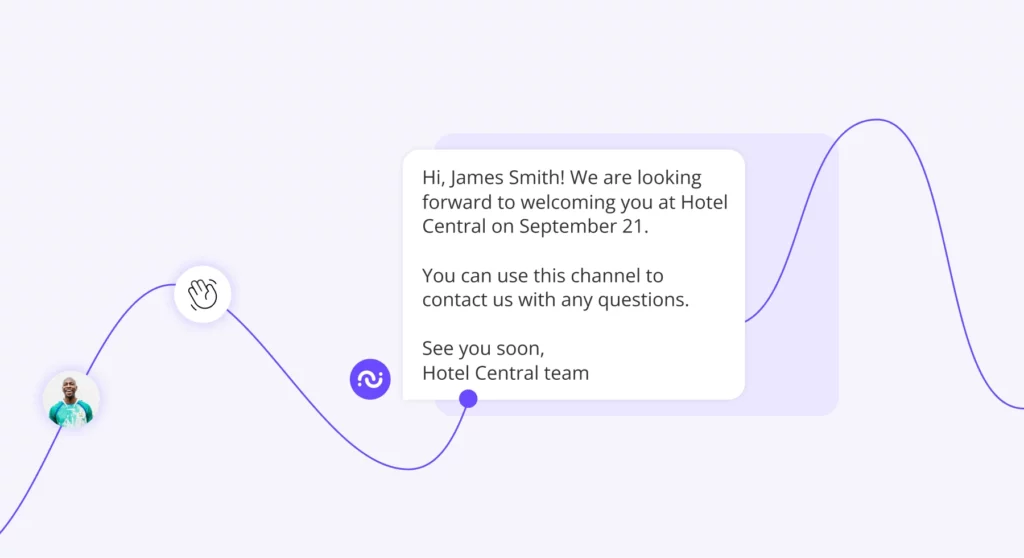
Guest engagement in the hospitality industry refers to interactions between the hotel and its guests. As broad as this term is, covering a wide range of experiences from a booking confirmation email to a bottle of wine in the fridge upon arrival, it is clearly centred around building and nurturing the connection between the guests and the hotel. Done successfully, it strengthens this relationship and puts your hotel on a fast track to customer loyalty and retention. In addition, satisfied guests are more likely to become advocates for your brand. They may leave reviews or share their great experience with friends and family. Of course, an engaged guest is also more likely to become a repeat visitor, and this loyalty is a gem in the hospitality industry. A study by analytics and advisory company Gallup found that, on average, guests that felt engaged with a hotel and its staff spent $185 more than guests that felt disengaged from the establishment. However, the study also revealed that only 22% of guests felt engaged with their most frequented hotel. The low percentage of engaged hotel guests suggests much room for improvement and plenty of scope for boosting revenue in the hospitality sector. By improving your guest engagement strategies, you can increase customer satisfaction, drive repeat bookings, and advance your hotel’s reputation.This article explores the best ideas to take your guest engagement tactics and strategies to the next level.Pre-Arrival Engagement IdeasThe opportunity to engage arrives well before the guests enter your hotel. Take advantage of this time to build anticipation.Send a welcome messageAutomating a welcome message is a simple process but one that can be highly effective. It is a chance to introduce your hotel and make your new arrivals feel appreciated. It is a chance to pass on information that could be useful to your guests to make their arrival smoother, such as details of online check-in processes or directions to find your location. In addition, you can take this opportunity to showcase your facilities, putting forward extra services the guest may be interested in, such as spa treatments or dining opportunities. Special offers or discount vouchers can encourage guests to book enhancements to their stay.Interact via social media channelsBy being present and responsive on social media, you are offering guests the chance to have their questions answered, and again, there, you can promote your latest special deals. Being accessible on any platform to suit your guest’s needs makes it easy to engage on their terms in the environment where they feel most comfortable.Introduce a virtual concierge serviceAs a guest engagement tool, an AI-powered digital assistant brings many benefits. It allows guests to find and book extra services and to reach out with any special requests. A virtual concierge makes it more convenient for guests to book a wake-up call, change the dining reservation time, or ask questions without speaking to staff at the reception desk. Of course, by encouraging guests to use your virtual concierge system, you are freeing up a great deal of staff time too. By bringing this service to guests’ attention before their visit, they have time to familiarise themselves with how it works, what it can offer, and make advance reservations.  Learn about your guests with a pre-arrival surveyBy requesting to fill in a pre-arrival survey, you can gather information that can be invaluable for providing a quality, personalised service. When you know in advance that a particular guest needs an accessible room, they prefer to be on a high floor, or that they require a vegan breakfast, you can be ready and waiting to provide the perfect seamless service. Use customer data to offer personalised room upgrade optionsBy gathering data before the guests arrive, you can then tailor tempting upgrade options to suit their needs perfectly. If you know they love a high floor, how about upgrading to the penthouse suite? If they have specifically requested a room with a view, you could offer them an upgrade to a room with a superior view. Arrival Engagement IdeasWhen your guests arrive, it is time to make an excellent first impression.Deliver a personalised welcome messageSome hoteliers would argue that it used to be easier to give your guests a warm welcome. This first contact chance to make a positive impact can often be missed as guests check in remotely, either online or via automated booths. On the flip side, this allows you to offer a welcoming message in other creative ways. You can deliver your message via email, text message, or social media, using the data you gathered pre-arrival to determine the guest’s preferred contact method. In addition, a welcome screen on the in-room TV is always a nice touch. Offer welcome drinks or snacksWhen guests enter your establishment, you will undoubtedly make an impact if you have a welcome drink to offer them. A nice glass of sparkling wine, freshly squeezed orange juice, or even a simple serving of spring water can be very welcome after a long journey. Treats such as luxury chocolates or home-baked cookies are small gifts, but these little indulgent extras can make a big difference and leave guests feeling as if they are getting a true VIP experience. Offer personalised hotel toursBy offering a hotel tour, you are getting the chance to engage with your guests, make a connection, and show off all the features and facilities of your hotel. A tour can help guests feel familiar with the layout of the building and the locations of key facilities, and it will be even more appealing if you can add interest with a bit of history or fun facts about the hotel. Remember to present the guests with upselling potentials such as the spa, bar, restaurant, or room upgrade options. Add engagement into the digital check-in procedureWhile you want your digital check-in process to be simple and straightforward, adding useful information and personalised recommendations is possible. Enabling guests to make restaurant reservations or book spa treatments during check-in can encourage guests to make bookings they may otherwise have omitted. In-Room Engagement IdeasEngagement in hospitality does not have to be in person. Forward-thinking hoteliers use guest data to provide personalised service.  Provide personalised room service You can make a guest’s stay memorable by thoughtfully utilising guest data from a pre-stay survey to add personalised touches to the room. Provide suitable pillows for a guest with a feather allergy, non-dairy coffee creamer for a guest with dairy allergies, or a hand-written card for a birthday or anniversary celebration. Offer room customisation optionsEvery guest has unique tastes, and it may seem impossible to design your rooms to appeal to everyone. However, you can offer smaller yet impactful room décor personalisation options, such as choosing the bedding to wall art, should they wish to. Make use of the latest technologiesIn-room entertainment is a big deal in hotels. These days guests are used to their homes filled with options, and so a business traveller with several hours to kill before a meeting will want more than a handful of TV channels to choose from. By offering technology-enabled entertainment such as streaming services or virtual reality experiences, your guests will leave knowing that all their entertainment needs are met at your establishment. Bring virtual concierge services to every roomWeary travellers love convenience, so by offering the ability to control room facilities via a digital concierge, guests can enjoy their experience from the comfort of their rooms. Everything is easier with an intuitive virtual concierge service, from managing the temperature and closing the curtains to ordering late-night snacks from room service. Offer in-room amenities customisationA luxury hotel stay is all about the details; when your guests can select those details, you add an extra level of engagement. With options to choose from a range of toiletry brands or a pillow menu, you can rest assured that those special touches will be the perfect fit for every guest. Dining Engagement IdeasAn excellent dining experience can whet your guests’ appetite to return to your hotel.Offer personalised dining recommendationsUsing data gathered pre-arrival, you can push tailored recommendations and deals for dining. You can suggest kids-eat-free deals for families, delicious plant-based dishes for vegetarians, or offers for solo diners aimed at business guests. It could be the key to keeping your guests on the property rather than finding a dining option elsewhere.    Themed dining events add interest Even the best restaurants can get tiresome when staying in a hotel for several nights. Offering themed dinner events can add extra appeal and bring return diners who would otherwise have eaten elsewhere. From a night showcasing local cuisine to an extravagant murder mystery dining experience, there are so many ways to engage with a themed dinner. Offer cooking classes and tastingsPut your catering staff in the spotlight with cookery classes or food and drink tastings. Guests can get to know the chef, learn new skills, and sample some delights in the restaurant or at the bar.  Offer enhanced room service optionsWith an extensive room service menu, guests can dine in their room without feeling they are missing out or compromising. From fine-dining multi-course menus to takeaway-style pizza, it is essential to cater to all tastes. Allow the option to customise menu items or make requests just as they would if they were dining in your restaurant. Using your pre-gathered data, you can suggest dishes that match their dietary requirements. Create customised menus for dinersHanding guests a menu customised specifically for their particular dietary needs is impressive. Whether they are gluten-free, dairy-free, vegan, vegetarian, or have allergies, they will definitely appreciate being given a menu where all the choices are available to them rather than having to hunt out the dishes they can eat from within the plethora of other options. Post-Stay Engagement IdeasEngagement should not end when the guest leaves the hotel.Collect data with a post-stay surveyAsking for feedback at the departure from your hotel is invaluable. From this, you can pinpoint your weaknesses and those areas where you excel. What aspects of your hotel did the guests like the most? Was there anything lacking? This information can help you set goals for the future, and it also gives you the opportunity to rectify specific customer issues that you may otherwise have been unaware of. Reach out for reviewsSending a follow-up message to guests thanking them for choosing your hotel for their stay also brings the opportunity to politely ask if they would leave a review. According to reviewtrackers, 63.6% of consumers check reviews on Google before visiting a business, so if you can encourage guests to leave a review by making it easy for them with a direct link, it could certainly enhance your profile.  Implement a loyalty programmeBy rewarding guests for repeat stays, they become invested in achieving the reward goals and are more likely to become regular visitors to your establishment. In addition, regular guests feel valued when they are rewarded for their loyalty. Use customer data to personalise future offersWith booking history and preferences data, you have the tools to present bespoke promotions to each guest, tailored to their own needs. Mailing list members can become an annoyance when they are inundated with advertising, particularly when the content is irrelevant to them. By personalising the correspondence, you can target advertising where it will be most welcomed and effective.  Encourage social media engagement By encouraging guests to follow your social media accounts, you are maintaining that connection, and keeping your business fresh in the minds of guests, months or even years after their visit. You never know when they may need accommodation in your city again, and your hotel will not be forgotten if you consistently post relevant, engaging content on your social media feeds.Challenges in hotel guest engagementHotel guest engagement has its challenges. With so many facets, keeping track of all the engagement avenues you are following can be difficult. Gathering data can be problematic, and then determining how to put that data to best use can also be an issue. For a single guest, you may have a pre-stay survey filled out via email, information gathered at check-in, dietary preferences conveyed to the restaurant, a complaint handled by housekeeping, and a positive comment posted on Facebook. All this information is valuable, but it is all in different formats on different platforms. The key is to centralise your data, and the best way to do this is to leverage customer relationship management (CRM) tools. Great guest engagement involves the human factor combined with technology. It is vital that your hotel staff is on board with all the technologies and digital tools used and that training is of a high level and continuous. It is also important to ensure that everything is addressed. An Instagram account filled with stylish images of your hotel can quickly turn from an asset to a liability if messages and comments on the account are not responded to quickly.  Measuring guest engagementThere are several ways in which hotels can measure and quantify guest engagement. Revenue and booking metrics can show, over time, growth in bookings, the efficacy of loyalty programs, and the percentage of repeat visitors. Review and rating sites bring their own metrics for your perusal, and your social media platform engagement can be monitored and analysed. Follows, likes, and mentions all give an indication as to how engaged people are with your brand. Your post-stay surveys allow you to gather specific data to obtain guest satisfaction scores, and by asking guests how likely they are to recommend your hotel, the Net Promotor Score (NPS) can be calculated. With so many varied methods of measuring guest engagement, it is wise to look to technology for a solution that can take your data from all sources, select relevant KPIs, analyse the data, and issue useful reports on which to base your future goals.  Start boosting your guest engagement todayThe hotel industry is a competitive one. These days it is all about using the latest technologies to offer an experience that is personalised for each guest. Guest engagement both enhances the guest’s stay and allows for the accumulation of invaluable data. As we have seen, there are many ways to engage throughout the guest journey, bringing a memorable experience and making your hotel stand out from the competition. All in all, you’ll be driving loyalty, encouraging repeat visits, and increasing per capita spending. At HiJiffy, we understand the importance of guest engagement. Book a personalised demo with our team to learn more about how we can help your hotel reimagine guest communications, boost guest engagement initiatives and manage guest data simply and efficiently.
Lire l'Article
Partager

Pagination des publications

Previous 1 … 5 6 7
Top News
  • L'intégration PMS améliore l'efficacité hôtelière en connectant divers systèmes via API pour un partage de données en temps réel.

    Lire l'Article
  • Dix critères essentiels pour choisir un fournisseur de Wi-Fi professionnel sécurisé et souverain pour les ministères en France.

    Lire l'Article
  • Carte Camping France Recense 2 500 Campings et Améliore la Recherche avec Données Google Places Fiables et Gratuites

    Lire l'Article
  • Northshore Development convertira un hôtel de Baton Rouge en Sports Illustrated Resort, lancement prévu fin 2027.

    Lire l'Article
  • La carte interactive du registre des opérateurs de voyages révolutionne la vérification des agences en France.

    Lire l'Article
Articles sponsorisés
  • Temps de réaction : le levier de revenu que les hôtels français sous‑exploitent encore
  • Pourquoi les groupes hôteliers en croissance rencontrent-ils une limite ?
  • Quicktext devient Quinta. Demain, vos réservations passeront par des agents IA. Etes-vous prêt ?
  • Quel PMS pour mon hôtel ? La réponse terrain
  • Comment adapter la visibilité de son hôtel quand l’IA change le parcours du voyageur
  • Le PMS idéal n’est pas un PMS, c’est une suite métier
Derniers articles
  • Le Rosemary Hôtel, premier 5 étoiles de Bastia, ouvrira en mai dans une demeure de 1925.
    • 18 avril 2026
  • Minor Hotels annonce la fermeture définitive de l'Anantara World Islands Dubai Resort le 10 avril 2026.
    • 18 avril 2026
  • MCR Property Group investit 150 millions de livres pour rénover et repositionner quatre hôtels à Londres sous une nouvelle marque.
    • 18 avril 2026
  • Zedwell transforme le 1 Princes Street à Londres en hôtel moderne, alliant patrimoine architectural et technologie avancée.
    • 18 avril 2026
  • Sunborn Vancouver : Hôtel Flottant Alimenté par Énergies Renouvelables et Réduction Énergétique de 60 à 70%
    • 18 avril 2026
Informations de contact
contact@10minutes.news
Espace publicitaire
Contactez-nous pour recevoir notre media kit à l’adresse suivante : tony@10minhotel.com
Communiqué de Presse
Cliquez ici pour publier votre communiqué de presse
Le 10 Minutes Hôtelier Le 10 Minutes Hôtelier
  • Top news
  • Articles
  • Communiqué de presse
  • Podcast
  • Vidéo
  • 👉 Newsletter
  • 🌎 Langues
L'actualité hôtelière résumée et simplifiée pour vous faire gagner du temps

Input your search keywords and press Enter.

Gérer le consentement
Pour offrir les meilleures expériences, nous utilisons des technologies telles que les cookies pour stocker et/ou accéder aux informations des appareils. Le fait de consentir à ces technologies nous permettra de traiter des données telles que le comportement de navigation ou les ID uniques sur ce site. Le fait de ne pas consentir ou de retirer son consentement peut avoir un effet négatif sur certaines caractéristiques et fonctions.
Fonctionnel Toujours activé
L’accès ou le stockage technique est strictement nécessaire dans la finalité d’intérêt légitime de permettre l’utilisation d’un service spécifique explicitement demandé par l’abonné ou l’utilisateur, ou dans le seul but d’effectuer la transmission d’une communication sur un réseau de communications électroniques.
Préférences
L’accès ou le stockage technique est nécessaire dans la finalité d’intérêt légitime de stocker des préférences qui ne sont pas demandées par l’abonné ou l’internaute.
Statistiques
Le stockage ou l’accès technique qui est utilisé exclusivement à des fins statistiques. Le stockage ou l’accès technique qui est utilisé exclusivement dans des finalités statistiques anonymes. En l’absence d’une assignation à comparaître, d’une conformité volontaire de la part de votre fournisseur d’accès à internet ou d’enregistrements supplémentaires provenant d’une tierce partie, les informations stockées ou extraites à cette seule fin ne peuvent généralement pas être utilisées pour vous identifier.
Marketing
L’accès ou le stockage technique est nécessaire pour créer des profils d’internautes afin d’envoyer des publicités, ou pour suivre l’utilisateur sur un site web ou sur plusieurs sites web ayant des finalités marketing similaires.
  • Gérer les options
  • Gérer les services
  • Gérer {vendor_count} fournisseurs
  • En savoir plus sur ces finalités
Voir les préférences
  • {title}
  • {title}
  • {title}