Le 10 Minutes Hôtelier Le 10 Minutes Hôtelier
  • Top news
  • Articles
    • Conférences et Salons
    • Distribution et Revenue Management
    • Gestion hôtelière
    • Fusion & Acquisition
    • Initiative eco-responsable et RSE
    • Innovation
    • Juridique et Administratif
    • Marketing Digital
    • Nominations
    • Ouvertures d’hôtels
    • Tendance du marché
  • Communiqué de presse
  • Podcast
  • Vidéo
  • 👉 Newsletter
  • 🌎 Langues
    • 🇬🇧 English
    • 🇮🇹 Italian
    • 🇪🇸 Spain
Le 10 Minutes Hôtelier Le 10 Minutes Hôtelier
  • Top news
  • Articles
    • Conférences et Salons
    • Distribution et Revenue Management
    • Gestion hôtelière
    • Fusion & Acquisition
    • Initiative eco-responsable et RSE
    • Innovation
    • Juridique et Administratif
    • Marketing Digital
    • Nominations
    • Ouvertures d’hôtels
    • Tendance du marché
  • Communiqué de presse
  • Podcast
  • Vidéo
  • 👉 Newsletter
  • 🌎 Langues
    • 🇬🇧 English
    • 🇮🇹 Italian
    • 🇪🇸 Spain
Accueil HiJiffy Page 6

Posts by tag

HiJiffy

63 posts
Lire l'Article
  • 4 min

How to use check-out to improve your hotel’s reputation

  • 10minhotel.com
  • 31 octobre 2023
L'expérience de départ de l'hôtel a un impact significatif sur la satisfaction des clients et la réputation de l'établissement. Des mesures telles que la simplification du processus de départ, l'ajout de petites attentions mémorables, l'encouragement des avis des clients et l'offre de services de transport, peuvent améliorer l'expérience finale du client et influencer sa décision de revenir ou de recommander l'hôtel.
Lire l'Article
Partager
Lire l'Article
  • 4 min

5 tips for reducing waiting times at hotel reception

  • 10minhotel.com
  • 30 octobre 2023
The problem is not new: nothing annoys hotel guests more than having to wait at reception. Whether it’s to check in on arrival or to get information during their stay, queuing at the front desk is an unpleasant experience that can quickly have a negative impact on your hotel’s reputation. And the shortage of staff in the hotel industry (estimated at 1.2 million hospitality workers in 2022 by the European Travel Commission) doesn’t help matters. Fortunately, there are technological solutions that can help you reduce queues at the reception, supporting both your guests and staff.So, how do you clear the endless queues at your hotel reception and make sure your guests leave with a smile? Here are a few ideas.1. Offer online check-in and check-outAccording to a study conducted by Coach Omnium, a French firm specialising in consultancy and marketing and economic studies for the hotel industry, 53% of hotel guests are irritated by the time wasted on arrival and departure. That’s understandable. After a long journey, no one wants to have their patience tested by waiting in line at the hotel reception. Whether you want to rest in your room or drop off your suitcases before going to explore the city, check-in should be as simple as it is fast. And similarly, at the end of the stay, travellers are often in a hurry, with tight schedules to meet for their return flight or train, and certainly don’t want to waste time queuing to check out. What’s the solution? Offer online check-in and check-out! How does it work? All you need to do is to send an online pre-registration form to your guests.  They can then enter all their personal information directly on the form before they arrive. Once they arrive, they won’t need to do this again, which means less time spent at the front desk. The same applies to checking out. All you have to do is send an online check-out form, and that’s it. But you still have to remember to send these forms in advance of the guest’s arrival. HiJiffy’s solution automates the sending of pre-check-in and check-out forms via WhatsApp, thanks to integration with your PMS. No more worries! This AI-powered solution takes care of it for you, saving time and work for your hotel teams. With an opening rate of more than 80% on WhatsApp, this allows hotels to digitise around 6 out of 10 check-ins, which significantly reduces queues at reception when guests arrive.2. Offer a digital keyBut, even if your guests manage to self-check in via a pre-check-in form sent before their arrival, don’t they still need to go to the front desk to pick up their key? Not necessarily, because it is also possible to offer digital keys, thus avoiding any visit to the front desk when guests arrive or leave. What is a digital key? As the name suggests, it is a digital key that allows guests to access their room without the need for a physical key. Instead of using a magnetic card or any other type of key, hotel guests open the door to their room using their smartphone or mobile app.With HiJiffy’s Guest Communication Hub, you can combine the automatic sending of the pre-registration form with a digital key. And just like that, no need to wait in line at your hotel’s reception. 3. Offer self-check-in terminalsIn the same vein, another way to avoid queues at reception by automating check-in and check-out is to offer automatic check-in terminals. Unlike with online check-in, here, guests check in on-site but do not need to be assisted by your reception staff. How? They can check in themselves on arrival by entering their personal details directly in the terminal. They will be then assigned a room and a key without the need for them to go to the front desk.The same goes for check-out. They can pay their bill and put their key back in the terminal, thus avoiding queues at reception. 4. Engage a virtual concierge Waiting at the front desk doesn’t only happen at the time of arrival and departure. During their stay, guests may have questions, want to book other services in your hotel or ask for local recommendations. That’s when a virtual concierge can turn out to be a handy support to your staff. But what is it? A virtual concierge is an AI-powered technology that helps assist hotel guests by handling their requests. In other words, it allows guests to get answers to their questions completely digitally without having to go to the front desk. Need to ask what time breakfast is served or book a table in the hotel restaurant? No problem! Guest requests and queries are processed automatically at any time of the day or night. The HiJiffy in-stay solution is available 24/7 in over 130 languages. Say goodbye to front desk queues! This applies not only to on-site guests but also to future guests who want to get information over the phone. HiJiffy’s conversational AI automatically resolves more than 85% of questions, significantly decreasing the number of incoming calls. Lake District Hotels, a group of family-run hotels in England, implemented HiJiffy’s solution and observed a decrease in incoming calls by 70% while increasing its direct bookings. Yes, having a virtual concierge will not only allow you to reduce the waiting times at the front desk but also increase your revenue.5. Offer a dedicated queue to customers who are members of the loyalty programmeFinally, another way to minimise the queue at the front desk of your hotel is to set up a dedicated queue for guests who are members of the loyalty programme. This makes it possible to better manage the flow of customers at the front desk while offering a personalised service for loyal customers. Offering a dedicated queue for loyalty programme members can also give you a competitive advantage. It incentivises more guests to choose your hotel over the competition, and, at the same time, it encourages guests who are not members of your loyalty programme to join. ———–By applying these tips, you can put an end to long queues at the reception and, above all, ensure your guests arrive and leave your hotel with a smile (and hopefully leave a glowing review!).
Lire l'Article
Partager
Lire l'Article
  • 12 min

What are the most common (and weird) questions from hotel guests?

  • 10minhotel.com
  • 30 octobre 2023
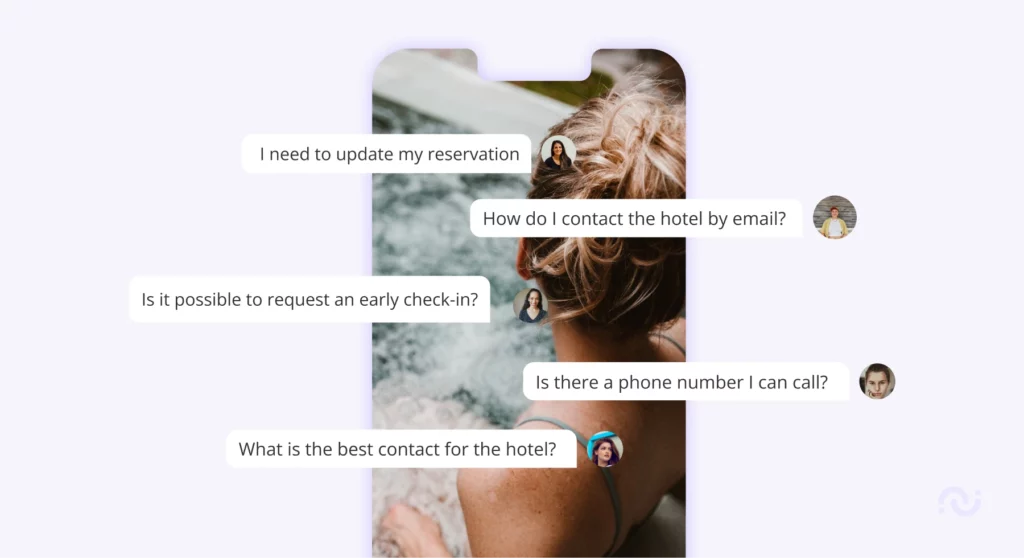
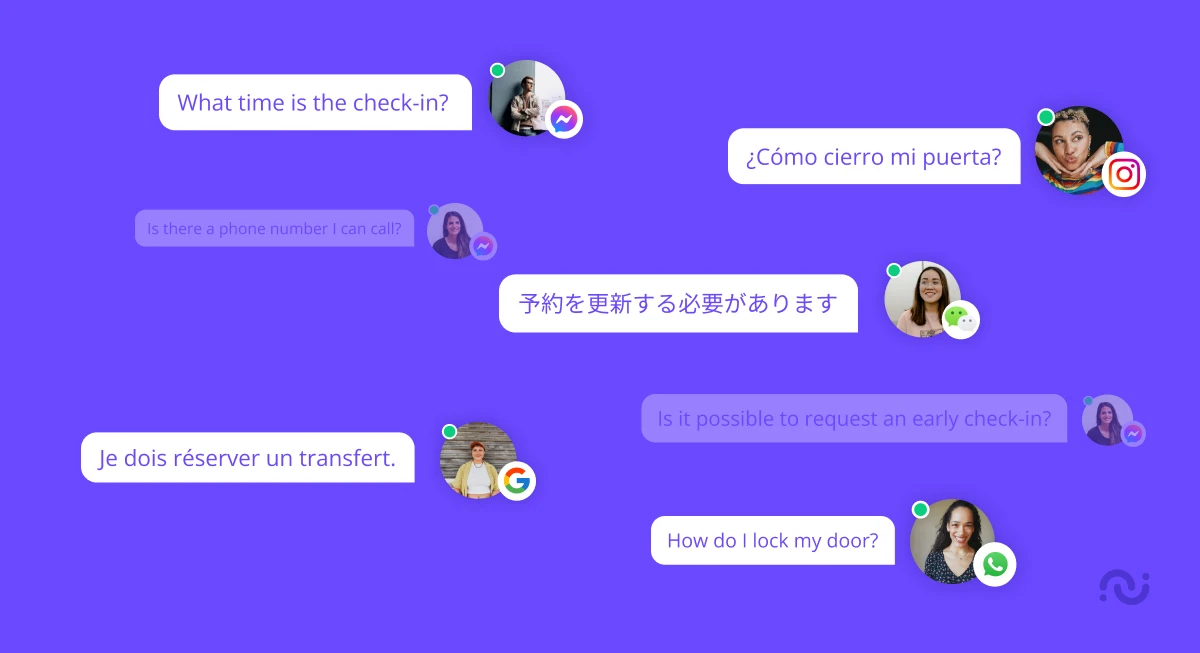
Ask any of your hotel teams dealing with incoming queries, and you’ll quickly realise how hot of a topic it is in the industry. The volume of work keeps on increasing due to peak demand, opening up new communication channels to meet guests’ expectations, and having fewer team members available to manage it all due to staff shortages in hospitality.In this article, you’ll find answers to some burning questions:Why do prospective guests have so many questions about their stay?What matters the most in guest communications? What gets in the way?Why is conversational AI so beneficial to hotels?And finally:What are the most common questions asked by travellers and hotel guests?We decided to share our data about the most common topics that show up in hotel guest questions from the summer of 2023, to help your teams review and improve information about your hotel and be better prepared for the next peak season. If they ever need support answering all the queries, our solution is here to help.At HiJiffy, we work towards the mission of developing the most advanced conversational AI for hospitality. Over 1,800 hotels in 50+ countries around the globe use our Guest Communications Hub to automate responding to incoming queries across the entire guest journey, 24/7, in 130+ languages, and across the most popular social media platforms and messaging apps.Now, let’s dive into exploring the most common guest questions in a hotel:The volume of queries from guests and travellers can be overwhelming for your hotel teams such as Reservations of Front Desk. To illustrate this with data, HiJiffy’s AI engaged in 1,707,204 conversations in the summer season of 2023 alone (June-August). You may wonder, considering your marketing team puts so much effort into providing information about the hotel on the website and distribution channels: why are there still so many incoming questions? Here are some of the most common reasons:Information overload (or gaps). Hotel websites can be cluttered with information or visually overwhelming, making it difficult for visitors to find specific details they are interested in. If they cannot identify it quickly and easily, they are likely to send their questions directly through available hotel communication channels, or seek it on the OTAs platforms. Alternatively, the information they seek may simply not be available on the website.Clarity and reassurance. Even though the information might have been found by a prospective guest, they may want to double-check its accuracy, especially if the details are critical to their stay. Speaking directly to a hotel representative or having confirmation about some policies in writing can provide the necessary reassurance and build trust towards your brand.Language barriers. For international travellers, English might not be their first language. They may doubt their own understanding of the information and seek an opportunity to have the questions answered in their native language or ask as many supplementary questions in English as they need to feel confident they understood it correctly.Unique queries and special requests. Guests often may have questions that require a personal approach and case-to-case considerations, be it a late check-in, organising special events, or arranging a surprise for their companion.Change of plans. After the booking, guests may need to modify or even cancel their reservation. While your hotel may have clear policies and procedures published on the hotel website or stated in a confirmation email, guests may want reassurance that the changes are possible or try to avoid the necessity to pay extra fees due to their circumstances. They could also need more information or advice on some logistics.Promotions and offers. Many of the guests’ questions are related to ongoing promotions, package deals, or loyalty programs. Travellers want to be sure they are getting the most available benefits and the best value for their money.Technological barriers. Although increasingly more people are technologically savvy, some travellers may require assistance with some processes, such as booking a stay online.Feedback and complaints. Following their stay, some guests may want to provide feedback about their experience, especially when it didn’t match their expectations. Processing and answering such queries is crucial to improving customer satisfaction, hotel reputation and client retention.Local recommendations. As hotels are commonly seen as local experts, they may receive questions from upcoming guests regarding nearby attractions, restaurants, transportation and other tips.Responding to incoming queries is of key importance in any customer-oriented service, but the impact is even greater in hospitality, which prides itself on the quality of customer service and care towards the (prospective) guests. What matters the most: Gold standards in hotel communicationsThere is a long list of critical factors that have an impact on the perception of the quality of this service, but these five are essential:Response time. Replying to the incoming query in the shortest possible time shows a high level of attentiveness and increases the likelihood of continuing the conversation, which in turn may lead to a boost in customer satisfaction and increased booking conversions.Accuracy and clarity. Always providing information that is correct, verified, and communicated in a way that is easy to understand, regardless of the language used.Personalisation. Addressing guests by their names and referring to specific details of their queries to show attentiveness.Helpfulness and professionalism. Showing goodwill and a problem-solving attitude, and using inclusive and friendly language when approached with any issues.Consistency across all channels. Having an exhaustive knowledge base or a guide for your teams in place to ensure guests receive the same answers regardless of the channel they use to communicate with your hotel.What gets in the way: The most common obstacle in answering guest questionsOn the flip side, there’s a list of key challenges (many of them amplifying one another) that can get in the way of achieving excellence in all the aforementioned areas:Volume of queries. As a customer-centric industry, there is a particularly high volume of incoming enquiries, especially during peak seasons.Multichannel communications. More platforms give more visibility and open new opportunities, but every new channel brings in more incoming messages needing attention.Language barriers. Not all guests will communicate in a local language, or commonly spoken languages like English, and having all language skills available in your teams is difficult.Staff shortages. In Europe alone, there is a 1.2 million hospitality staff shortage, having a significant negative impact on the challenges listed above.Knowledge gaps. Creating and maintaining an up-to-date pool of information about the hotel and all its services, available at all times to your staff, is a time-consuming task.In the last few years, the hospitality industry saw the arrival of conversational AI being used to enhance the capabilities of standard chatbots with features like sentiment analysis, self-learning, voice assistance, or generative AI (like GPT-4). To call it the emergence of a new era of guest communications would not be an exaggeration.Appreciated by guestsUsing a lot of smart technology in their everyday life, guests show a positive attitude towards – or even preference for – interacting with it while staying at hotels. A study by Oracle from 2022 showed that 67% of travellers are interested in staying at hotels that use AI to deliver personalised service. The same research indicated that 36% of hotel guests would opt for a fully contactless, digital service with hotel staff available only on request.Needed by staffTravellers’ fondness for AI is good news, considering the significant staff shortages of 1.2 million in the hospitality sector alone, as announced by the European Travel Commission in 2022. The organisation advised the industry to address this challenge with a strategic solution of integrating AI technologies to support reservation and reception teams. Insights from the usage of HiJiffy’s Guest Communications Hub reveal that hotels using conversational AI optimised for the hospitality sector achieve impressive automation rates. On average, over 85% of incoming queries are autonomously resolved to guests’ satisfaction. Additionally, for the remaining 15% of queries that demand human input, the AI seamlessly transfers guests to the relevant hotel team. This approach ensures that staff members intervene only when their attention is essential, enabling efficient management of guest interactions. Overall, the solution presents a great opportunity for hotels to reduce the volume of work for their teams while maintaining, or even improving their customer service level.Benefits of implementing conversational AI in guest communicationsThe key benefits of using an AI-powered chatbot solution in the context of automating processing and resolving guest queries include:Improved response times and 24/7 availabilityProviding multilingual supportEnhanced guest engagement and satisfactionOptimised staff resources and time allocationData-driven insights for continuous improvementGathering actionable insights from guest interactionsAdapting AI responses based on guest feedbackAutomating processes and facilitating online interactionsBeyond responding to queries, this advanced solution can increase direct bookings, generate more revenue from upselling, boost teamwork, optimise internal communication, and much more by leveraging integrations with other hotel tech solutions.We analysed HiJiffy’s data from the summer of 2023 from over 1,800 hotels across 50+ countries around the world, aiming to provide a comprehensive overview of the most burning questions travellers and guests had when contacting hotels. Beyond the most common topics of frequently asked questions (FAQs), we looked more closely at the differences between various communication channels, identified emerging and seasonal trends, and picked a few unusual questions.HiJiffy’s conversational AI has seven years of training in hospitality and specialises in over 200 industry-specific topics, with new ones added continuously.Top 50 FAQs for HotelsCheck-inWhat time is the check-in?Is it possible to request an early check-in?Can I check in online?Bookings managementHow can I manage my booking?I need to update my reservationCan I change my reservation?Meals plansWhat does the all-inclusive include?What’s included in the half board?What is the difference between all-inclusive and half-board?ContactsHow do I contact the hotel by email?Is there a phone number I can call?What is the best contact for the hotel?Transfers, shuttles and car pick-up serviceI need to book a transfer.I need to book a transfer.Do you have an airport shuttle?Can you arrange transportation from the airport?Spa & WellnessDo you have a spa?Where can I see the spa menu and prices?What massages do you offer?ParkingDo you have parking?How much does the parking cost?Is the parking free?Reservations department contactsWhat are the reservation contacts?Who do I contact to make a reservation?What is the phone number for reservations?RestaurantsWhat are the opening hours of the restaurant?Where can I see the menu?What is served at the restaurant?BreakfastWhat is served for breakfast?What are the breakfast hours?How much is the breakfast?Discounts, offers and partnershipsDo you have any special offers?How do I use my promo code?Is there a discount for large families?Check-outWhat is the check-out time?Is there a late check-out option?What time do you have to leave the room?Booking a tableI’d like to book a table at the restaurantWhere do I make a restaurant reservation?I would like to reserve a table for two.Room types and viewsDo you have family rooms?Do the rooms have a balcony?Is there an ocean view or a public pool view from the rooms?Pet policyDo you allow pets?Are you pet-friendly?What’s your pet policy?CancellationWhat is your cancellation policy?I want to cancel a reservation.Is it possible to cancel my booking?Swimming poolDo you have a swimming pool?Are there any swimming pools at the hotel?Is there an outdoor swimming pool?Room amenitiesIs there a fridge in the room?Do the rooms have a hairdryer?Is there air conditioning in the roomLocationWhat is the hotel address?What’s the location of the hotel?Where is the hotel exactly?Children policyFrom what age do children pay?What is your policy regarding children?Until what age is a person considered a child?Payment methods and termsCareersBooking confirmationWiFiBook day use and day visitorsGymBars and loungesAmusement parksKids clubs, playgrounds and entertainmentSpecial requestsGifts and vouchersWeddingsBook amusement parkSpa & Wellness reservationsSwimming pool/beach towels, sun umbrellas, and loungersBed typeSwimming pool opening timesLoyalty programPackagesAccessibilityRoom serviceEvents & Live performancesAbout the propertySwimming pool accessSpa & Wellness menu and pricesGolfDirect bookings and Best ratesMembers area and loginGroup bookingBaby cots, high chairs and strollersDominant categories: What guests want from a hotelLooking at the list, we can distinguish five main categories of FAQs for hotels:Hotel reservations and bookings questionsThis prominent category illustrates how important it is for guests to have clarity on the status of their booking and any changes that can affect it, for example, booking confirmations, group bookings, and cancellations.Questions about hotel amenities and facilitiesThe second main area indicates the guests’ interest in everything the hotel offers and expected service levels, such as breakfast options, swimming pool facilities, gym equipment, and spa menu.Hotel policies and procedures questionsThis group signifies guests’ need to understand their rights and hotel rules, including check-in and check-out times, loyalty programmes, payment methods, and children policy.Questions about hotel services and special offersAdded-value services and promotions that attract guests or improve their guest experience, for example, airport transfers, gift vouchers, packages, and special events.General informationFinally, many topics can fall into this category, from opening hours or facilities to logistics, to finding the right contacts.The most common topics per channelWhile we observed slight differences in the popularity of certain topics across various platforms, it remains clear that you are likely to receive all kinds of questions on each of them. Here are the most common topics of queries segmented by the popular communion channels.The most popular hotel questions on Website chatThough not varying too significantly from the general list of common topics, the website chat appears to have a big volume of enquiries that may impact the booking decisions (pet policy, payment methods and terms, meal plans) and logistical pre-arrival questions (parking, transfers, the location of the hotel). Having immediate responses available to those queries at all times can increase booking conversion and guest satisfaction.Check-inMeal plansParkingTransfers, shuttles and car pick-up serviceBreakfastBookings managementDiscounts, offers and partnershipsContactsRestaurantsSpa & WellnessCheck-outPet policyCancellationLocationBook a tableRoom amenitiesPayment methods and termsBooking a day use and day visitorsRoom types and viewsSwimming poolThe most popular hotel questions on WhatsAppThis most popular messaging app in Europe and South America is a preferred channel for many guests. Aside from the overall alignment with general trends, there were a few topics beyond the pre-stay stage of the guest journey, for example, enquiries about the WiFi (#11), breakfast (#13) and luggage (#15), as well requests to leave a review (#8).Check-inParkingManage BookingsCheck-outContactsChildren policyTransfers, Shuttles and Car pick-up serviceReviewsDiscounts, Offers and PartnershipsCancellationWiFiRoom amenitiesBreakfastGroup bookingLuggagePayment methods and termsBooking a tableRestaurantsSwimming poolLocationThe most popular hotel questions on Facebook MessengerOn the list, there are several enquiries about special amenities, such as restaurants (#1), buffet (#5), casino (#16) or activities for children (#8), but general questions about job opportunities (#2) and discounts (#3) are among the most popular ones.RestaurantsCareersDiscounts, offers and partnershipsContactsBuffetTransfers, shuttles and car pick-up serviceBreakfastKids clubs, playgrounds and entertainmentWeddingsCheck-inBookings managementRoom types and viewsPet policyBooking a day use and day visitorsSwimming poolCasinoSpecial requestsEvents and special occasionsLocationRoom occupancy and extra bedsThe most popular hotel questions on InstagramIt probably doesn’t come as a surprise that the number #1 question asked on this platform is related to influencers. After all, Instagram facilitated the rise of influencer marketing. Primary a visual platform dominated by lifestyle content, it is a fantastic platform to showcase your hotel’s ambience and facilities. From tasteful room decor and breathtaking views (#12 popular FAQ topic on its own) to spa facilities (#18), mouth-watering food served at your restaurant (#10 and #16) or colourful cocktails at the bar (#13). Showcasing a strong visual appeal or your hotel on this platform can also inspire questions about organising live events, weddings and celebrating other special occasions (#8, #14 and #11, respectively). Leverage this interest by having a clear list of services and facilities available for events hire.InfluencersCareersContactsBooking a day use and day visitorsDiscounts, offers and partnershipsLocationCheck-inEvents & Live performancesTransfers, shuttles and car pick-up serviceBreakfastEvents and other special occasionsRoom types and viewsBars and LoungesWeddingsPackagesRestaurantsPayment methods and termsSpa & WellnessMeal plansParkingThe most popular hotel questions on Google Business Profile (formerly Google My Business)This platform is the most immediate way to ask a hotel a question right from the Google search results or while exploring Google Maps. Logistical questions are popular, from confirming the check-in hours (#1) to car parking and transfers (#4 and #5), but they remain in line with the overall trends in topic popularity.Check-inContactsMeal plansParkingTransfers, Shuttles and Car pick-up serviceManage BookingsBreakfastBook day use and Day visitorsCareersRestaurantsBooking confirmationRoom amenitiesCheck-outPayment methods and termsSpa & WellnessThe most popular hotel questions on WeChatThe robust communication platform showed a significant trend in topics related to COVID-19 (#1, #6), likely due to the predominance of the app’s popularity in China and Southeast Asian countries and local changes related to pandemic-related policies in 2023. Another popular topic different to the overall trends was electricity and voltage (#10), probably common among international travellers outside of Asia.Covid testCheck-inContactsDiscounts, offers and partnershipsGetting thereCOVID-19Connecting and adjoining roomsAirportBookings managementElectricity and voltageRoom types and viewsBars and LoungesCancellationRestaurantsCheck-outHiJiffy’s conversational AI integrates with Facebook, Instagram, WeChat, Google Business Profile, WhatsApp, Line, Telegram, SMS, email, as well as offers its own website live chat widget.Emerging questions from hotel guestsWhile HiJiffy’s conversational AI is specialised in over 200 hospitality-specific topics already, we keep on training it in the new ones whenever we notice an area for development. Some of the latest niche topics we added include:Sports lessonsSafari equipmentKey locksLobbyBicycle parkingArtSuitesGuest showersFemale dormsLockersHouse rulesTipsSeasonal spikes of interestCompared to the previous quarter, we noticed a rise in queries related to the following topics:Swimming pool: beach towels, sun umbrellas and loungersLong-term rentalCampingShoppingCuisineHotel reviewsInfluencersTopics related to water (#1) and outdoor (#3) activities are expected in line with the arrival of summer, perhaps also including a rise of messages from influencers (#7). A boost of requests to leave a review (#6) can also be expected in peak season.Guest can also be seen to more often ask about local food and beverage recommendations (#5) and the best places to shop (#4). Interestingly, there was a spike in interest in long-term rentals (#2), which could be associated with the increase in mobility and remote work; however, it remains a subject for another research.Unusual and weird questions hotel guests askEvery guest-facing team has a few good anecdotes about the most unusual and odd guest queries they received, and so does our conversational AI:“Can you make sure my room number is odd?“Can I bring my own sheets and pillow?”“Brought 2 dogs weighing less than 7kg. What do you think?”“Can I bring my exotic pet?”“Are small hands allowed?”“Can you remove the bed frame and just keep the mattress?Whenever our conversational AI cannot successfully resolve a quest query, it can seamlessly pass on the conversation to your staff. On average, the need for assistance from hotel staff is below 15%.This report identified the most common questions travellers and guests contact hotels about. This data can guide you and your teams while reviewing publicly available information about your properties or improving supplementary information provided after the reservation.If processing the volume of incoming queries remains a challenge for your teams, reach out to us and arrange a personalised demo to see how our Guest Communications Hub can help you by:We hope you succeed in a mission to leave no guest queries unanswered!
Lire l'Article
Partager
Lire l'Article
  • 1 min

What Hotel Guests Really Want to Know – Top 50 Questions Asked in Summer 2023 [Free Report]

  • 10minhotel.com
  • 23 octobre 2023
Ce rapport gratuit présente les données principales sur les questions les plus courantes des clients d'hôtels durant l'été 2023, informations pouvant aider les équipes hôtelières à améliorer leur préparation pour la prochaine haute saison. Le rapport HiJiffy sur les requêtes des clients offre également des réponses à des questions clés concernant les communications avec les clients, l'utilisation de l'IA conversationnelle dans l'hôtellerie et les questions les plus fréquemment posées par les voyageurs et clients d'hôtels.
Lire l'Article
Partager
Lire l'Article
  • 4 min

Five essential hotel metrics and how to calculate them

  • 10minhotel.com
  • 26 juin 2023
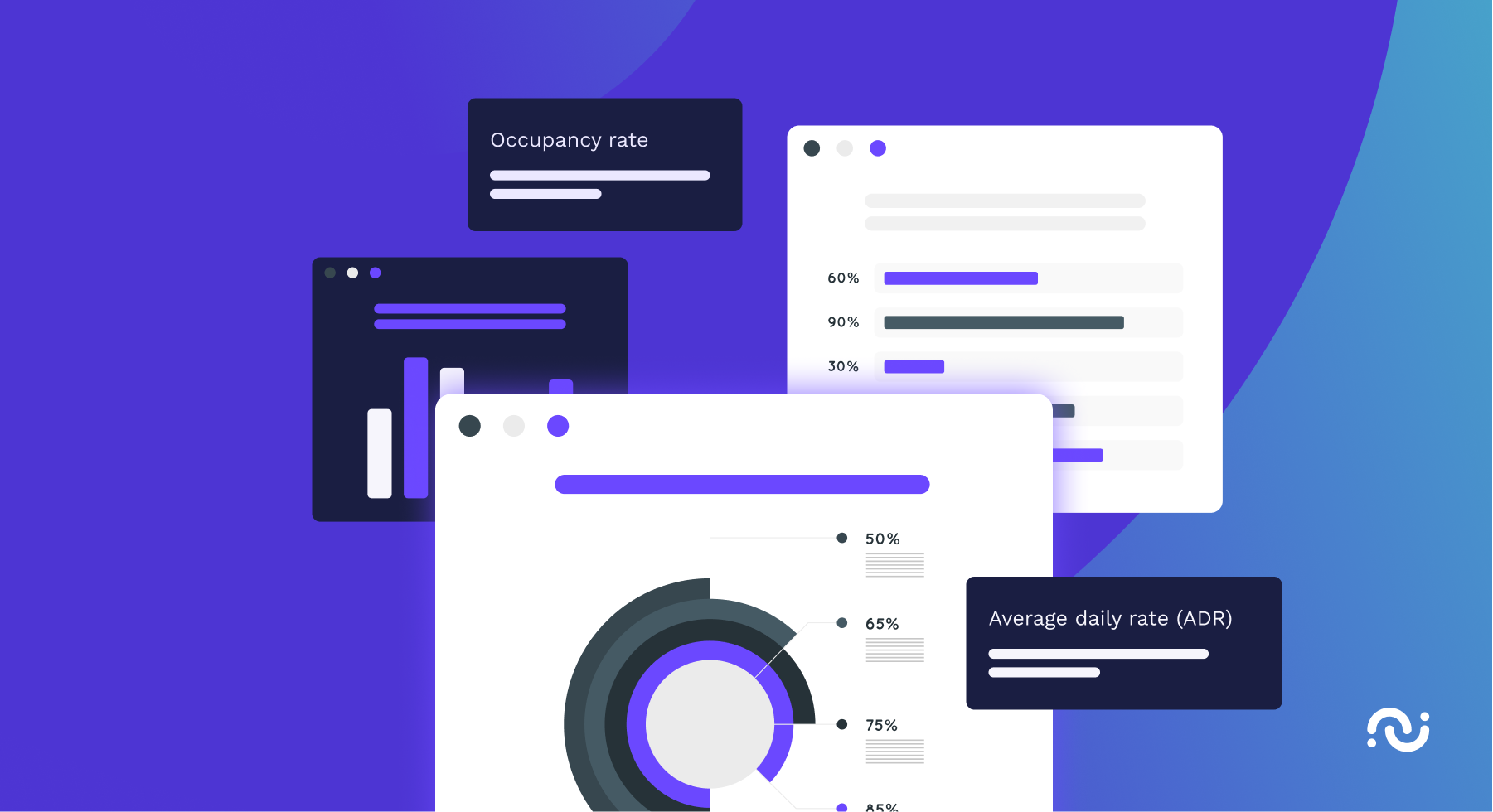
Tracking your hotel metrics involves gathering vital data and interpreting it in order to gain valuable and actionable insights into the performance of your business. With accurate and thorough metrics, you have a solid base from which to set your goals and KPIs. With regular monitoring, you can compare them over time, and see how you are performing compared to your competitors or to average hospitality standards.How to decide which data is most important to keep track of? Let us guide you through the five essential hotel metrics to track that can add value to your hotel data analysis.Occupancy rateWhat it is: Occupancy rate is the percentage of rooms that are occupied at your properties.Why it is useful: Monitoring this metric and comparing it to the industry average can help to highlight particular times when there may be a peak or a drop in expected bookings so that you can plan for making the most out of the situation. For example, if you know you have a lull on weekdays in March, you can launch a targeted campaign with discounts for that period. This metric also helps you to fine-tune your staffing levels and resources.How to calculate it: OCCUPANCY PERCENTAGE = OCCUPIED ROOMS / AVAILABLE ROOMS. For example, if 176 of your 250 rooms are occupied, then your occupancy rate is 176/250, which gives you 0.704, or 70.4%.Average daily rate (ADR)What it is: The average daily rate refers to the average price paid per room in your hotel.Why it is useful: Many hotels do not have set rates for rooms, and instead, the rates change according to the time of year, day of the week, and other factors such as projected occupancy rate. When rates regularly change, it can be useful to compile all this data into one single figure, the ADR, to ensure your prices remain overall competitive, while still being profitable. How to calculate it: ADR = TOTAL ROOM REVENUE / NUMBER OF OCCUPIED ROOMS. For example, if you have 60 rooms occupied with a total revenue of €18,543 then your ADR is €18,543/60, which gives you an average daily room rate of €309.05. Revenue per available room (RevPAR)What it is: RevPAR is a different take on the ADR. This metric takes the overall room revenue into consideration but disregards how many rooms are occupied or vacant. Why it is useful: This figure, which amalgamates the occupation data with the revenue data, offers good insight into the overall profitability of the hotel at current occupation levels. How to calculate it: RevPAR = TOTAL REVENUE FROM ALL ROOMS / TOTAL NUMBER OF ROOMS.For instance, if your hotel has 120 rooms, and you have received €23,500 in total from letting out some or all of these rooms, the calculation is €23,500/120 which gives a RevPAR of €195.83.Gross operating profit per available room (GOPPAR) What it is: GOPPAR gives us another vital view of the per-room finances. Why it is useful: This metric focuses not on the rates but on the profit, instantly showing you how much profit you are making for each room you have available. This figure will include all revenue streams, rather than simply just the room rate, so it will take into account extra services such as restaurant meals, drinks at the bar, and spa treatments. How to calculate it: GOPPAR = GROSS OPERATING PROFIT / NUMBER OF ROOMS. For example, if you add together all the profits of the business from all areas of the hotel and it comes to a figure of €165,543 and you have 92 rooms, your GOPPAR is €16,5543/92  = €1799.38.Customer satisfaction score (CSAT)What it is: This score is a method of measuring customer satisfaction levels.Why it is useful: Measuring customer satisfaction is a many-faceted technique that gives incredible insight into how your customers perceive your business. We explore the importance of the CSAT score in hospitality in a dedicated article.How to calculate it: There is no simple equation to calculate your CSAT score, but systems can be implemented, and software utilised to gather the right data and give you a reliable CSAT score. This is a potentially complex process that needs to be done right in order to extract the most valuable data, but it can be simplified and automated.Metrics can be easy to monitor with the right toolsMonitoring hotel metrics can add significant value to your business intelligence. Benchmarking against industry standards or your competitors can help you identify priorities and areas of improvement. In order to make the metrics as useful as possible, you should calculate and monitor them on a regular basis, extracting actionable insights.However, measuring hotel performance metrics can be complicated and time-consuming. When choosing your tools and systems, look out for which metrics they can monitor for you. HiJiffy’s Guest Communications Hub uses conversational AI to effectively and efficiently automate your CSAT calculations, providing clear metrics and putting them in the context of wider insights from your guest communications.For more hotel metrics and explanations of hotel industry jargon, take a look at our glossary page.
Lire l'Article
Partager
Lire l'Article
  • 2 min

What’s New: Refreshed Console and Updated Plans

  • 10minhotel.com
  • 9 mai 2023
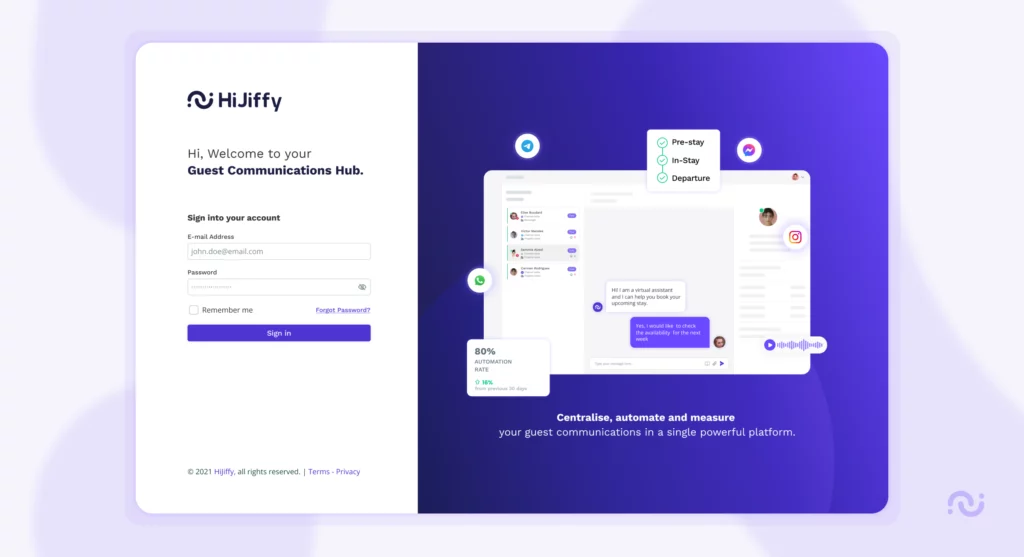
The refreshed brand of HiJiffy also extends to our Console, the interface of our Guest Communications Hub, as well as new streamlined plans that allow clients to best match them for their business needs.In this post, we‘ll take a closer look at the Console updates and the differences between the new plans.When you are about to start working in your Guest Communications Hub, you will notice our new visuals welcoming you on the login page. The new visual style, colours, and fonts continue on in the Console.Some of the changes you can spot in the Console include:In the refreshed inbox, you can use quick filters above the list of conversations to sort them by read/unread status or by channel type at the bottom of the screen.In the contacts tab, you can now see requests and bookings associated with the conversations.There are also a few changes to the widget customisation page, where you can see updated formats and icons.Different plans available within our Guest Communications Hub have also been revisited, streamlined and upgraded, bringing even more benefits to the users of our solution. Our current clients will be contacted about their plan alignment soon.Pro (formerly Booking Assistant)With unlimited FAQ topics, 132 languages supported (including translation of inbox conversations), and powerful API integrations with booking engines this plan allows your guests to book at any time with the guidance of a virtual AI-powered agent on the hotel website, popular social media (Facebook Messenger, Instagram, WeChat) and Google Business.This plan will empower you to make the most of your guest communications in the pre-stay stage, boosting direct bookings and improving guest satisfaction. You’ll benefit from powerful features and capabilities at your disposal, including multiple properties compatibility, the possibility of grouping agents into teams, voice assistant, self-learning AI, and much more.Premium (formerly Full Suite)Our most popular plan covers communications across the entire guest journey: answering FAQs, chat-based booking, personalised pre-arrival and in-stay campaigns, upselling, and automating processes – everything you need to reimagine your guest communications. Channels available to you will also expand from the website and social media to SMS, email, and messaging apps (WhatsApp, Line, Telegram) as well.On this plan, you will get access to our advanced AI features, like sentiment analysis, and be able to take advantage of integrations with standard integrations with popular property management systems (PMS), customer relationship management (CRM), maintenance systems, and more.Basic & EnterpriseWe also have two more plans to accommodate both minimal needs and above-and-beyond requirements. With the Basic plan, you get a light version of our solution with limited features, including a website widget automatically answering common guest queries within 25 standard FAQ topics, direct links to booking engines (no API integration), and basic reporting.On the other side of the scale, you have the Enterprise plan offering the possibility to tailor our solution to your exact needs, including custom automation, reporting, integrations and powerful marketing campaigns.
Lire l'Article
Partager
Lire l'Article
  • 4 min

Explained: How the new version of Aplysia uses GPT

  • 10minhotel.com
  • 30 mars 2023
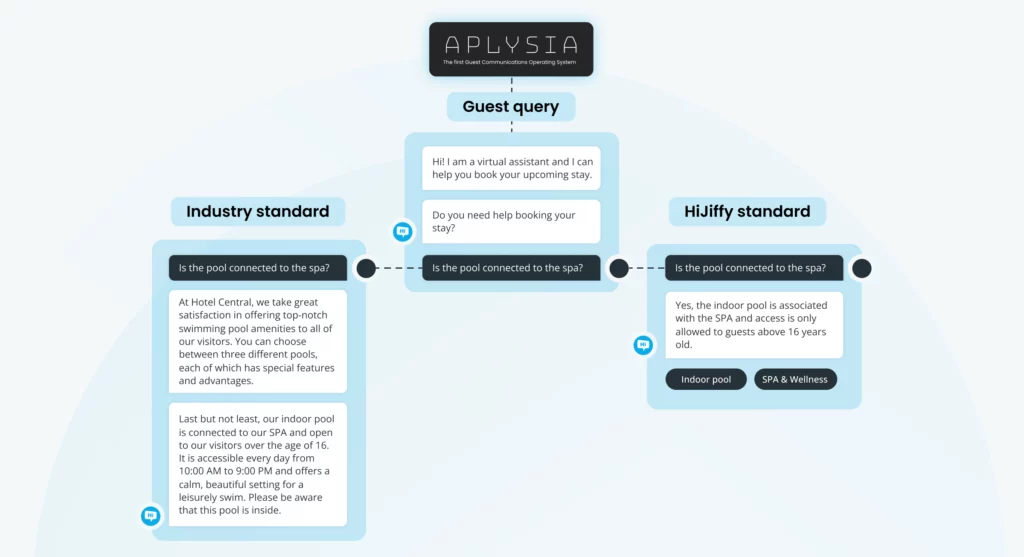
The new version of Aplysia OS uses the now famous Generative Pre-training Transformer (GPT) technology – a large language model developed by OpenAI. Such models have revolutionised natural language processing in recent years allowing machines to understand and generate seemingly human-created text with unprecedented accuracy. These AI models learn to generate text by identifying patterns in massive amounts of text data, resulting in their capability to produce output indistinguishable from one written by a human.The advanced conversational capacity of the new version of Aplysia OS was developed to enable user interactions in natural language and even more personalised responses to user queries. Built using a cutting-edge AI architecture, HiJiffy’s Guest Communications Hub has increased efficiency in providing direct and specific answers to user questions and, significantly, in ensuring their accuracy and alignment with factual information about the hotel.This development within the Aplysia OS will boost your guests’ satisfaction thanks to the personalised and focused answers, and building on this, your hotel staff will benefit from the reduced volume of guest queries to process.Whether you need a chatbot that answers questions about the hotel or a virtual assistant that increases your revenue, HiJiffy’s upgraded Guest Communications Hub is a reliable and effective solution for all your guest communications needs.What are the advantages of using the new version of Aplysia?It can comprehend and interpret the nuances of human language, allowing for providing accurate and helpful answers to a variety of inquiries regarding the hotel. This capacity can lead to a better guest experience and more effective communication.It provides more customised answers to questions not necessarily programmed into a system. To ensure complete accuracy, AI will only generate answers based on hotel information specified by your team.Easier and faster hotel information setup in our solution due to less configuration required. Aplysia will be able to form answers based on the minimum necessary information.To illustrate these brilliant new capabilities of Aplysia, let’s take a closer look at how they work in practice.As illustrated, HiJiffy’s solution now has the capacity to filter available information about the hotel to provide a direct specific answer to guest queries. If they wish to access further information, they can do so by clicking on a clearly labelled button, like “Indoor Pool” or “SPA & Wellness” in this example.Here is another practical example.As shown here, our improved conversational AI will generate concise and focused answers rather than presenting a lengthy message with additional yet not necessarily sought-after information. Still, the further relevant information is suggested if a guest requires to learn more.In addition to the direct response, our solution will simulate a conversation with the guest, allowing for a more natural and personalised experience.How does the new version of Aplysia OS work?This new version of our proprietary OS is built on top of the entire framework already developed by HiJiffy, making it a reliable solution.Client hotels will need to provide essential information about the hotel in a dedicated area of our Guest Communications Hub. They can browse our extensive hospitality FAQs library with over 200 entries and submit information about various topics specific to their hotel. Speeding up the process, the configuration has been made easier for our customers as it will not be necessary to provide descriptive, complete passages of text. Generating such user-friendly output will be the job of Aplysia.Once all this information is stored in our system, our conversational AI will be ready to delight your guests. Aplysia uses Natural Language Processing (NLP) models and Proximity to better understand the user’s question or questions. They identify the best answer to the user’s question and together create a “knowledge” of the conversation based on the user’s question and the hotel information available in our system.The “knowledge” and the relevant response obtained allows us to then use the GPT. This technology was fine-tuned with our rules so we can use it in a safe and thoughtful way to consolidate an answer to the user’s question. Subsequently, our AI-powered guest communications solution will generate the best answer taking into account the knowledge obtained from hotel information and the user’s question.Reliability first: how HiJiffy’s AI overcomes “artificial hallucinations”GPT is one of the most disruptive technologies of the moment and therefore it is often considered complicated to control. It sometimes suffers from a term called “artificial hallucination.” This phenomenon refers to a situation when a machine, such as a chatbot, generates an output that appears to be realistic but is not based on any factual information, such as input from the hotel. Chatbots used in the hospitality sector would provide misleading content about the hotel, its services and amenities.To be a reliable solution for guest communications, our Aplysia OS needed to address and resolve the challenge of “artificial hallucinations” and our Data Science team took on this challenge.First of all, the new version of Aplysia is built on top of our existing framework in order to decrease hallucinations and inaccurate answers. Our specialised hospitality NLP models and features like Proximity and Self-learning played an important role in avoiding such situations. Maintaining the highest level of accuracy of the information based only on the provided input about hotels was our priority when working on developing the newest version of our AI. We run numerous tests and we reached good results only when incorporating our architecture, which prevents the OpenAI models from hallucinating and providing messages with false or unknown content. If our AI cannot provide an accurate answer, it transfers the conversation to a hotel agent to take over.As shown in the above example, the system will swiftly transfer the conversation to a hotel agent if the user tries to start a conversation about a subject that is not specifically linked to the hotel.The waitlist for this new version of Aplysia is now open.
Lire l'Article
Partager
Lire l'Article
  • 14 min

Six trends in guest communications for hoteliers to consider in 2023

  • 10minhotel.com
  • 26 janvier 2023
The number of hotel tech solutions related to guest communications continues to expand on the market. Which services are likely to become a standard? What type of benefits can they bring to your business? The number of available options can become overwhelming and take the joy out of a journey that should be an exciting one. After all, it is all about bringing cutting-edge technology to hotels, benefiting guests and staff.To help hoteliers navigate the available options, we collated data from the hospitality industry reports as well as HiJiffy insights in order to map out ongoing and upcoming trends in guest communications. We hope it empowers hospitality decision-makers to choose digital solutions with more confidence.In this article, we explore the following six ongoing and emerging trends in guest communications in 2023:Further digitalisation of communication: Self-service through automation and contactless technologiesWe are increasingly taking our lives online, and the digitalisation of many of our everyday processes has made using these technologies second nature for many of us worldwide. Offering digital services within the hotel industry brings several benefits that guests will undoubtedly appreciate.You can expect this trend to be on everyone’s radar as “adopting innovative technological and digital solutions to improve daily operations (…)” is one of the key recommendations made by the World Travel & Tourism Council and European Travel Commission (2022) for the governments and private sector to address 1.2 million staff shortages in the industry.Automation: addressing staff shortagesBy offering guests the ability to communicate with the hotel during their stay through apps or other digital channels, you are making it more convenient for them and reducing the demand on your staff. Queues will be shorter, and satisfaction levels will be higher for both those who opt-in for the digital services and those who still prefer to use more traditional methods of communicating with your staff and making their reservations. The Oracle report (2022) also stated that 36% of hotel guests prefer a fully contactless, digital service with staff available only on demand. It works both ways, as staff members have fewer customers to deal with, so they can give their full attention to those who do need in-person care. The level of service is improved all around as everyone contacts your staff in the way they choose. These new digital technologies allow for greater automation of not only communications but also tasks, enabling guests to serve themselves further. By automating regular processes and allowing guests to easily complete tasks themselves, such as making, altering, and cancelling bookings and reservations, as well as checking in and out, you are freeing up staff to excel in other areas. You can then focus on adding the human touch just where it is needed rather than focusing on the regular, mundane tasks that these days, with the right system in place, are more easily automated.Contactless: time-saving and convenience Whether visiting for business or leisure, travelling can be tiring and does not always go to plan. By offering a quick and easy check-in to a hotel via digital channels, you are cutting out waiting in line and time-consuming form filling. By implementing digital door keys, guests can even proceed directly to their rooms, unlocking the doors with a mobile phone app. It is the perfect solution for busy travellers and has the added value of being contactless. A survey by Oracle (2022) reported that since the pandemic, 65% of people prefer hotels that use technology to limit the interaction needed with hotel staff. These contactless digital solutions can make life easier for your guests, with the opportunity to order room service via a chatbot or book a spa treatment online. This, in turn, increases revenue for your business. Make a process simple, and more people are likely to use it. With contactless services readily available, should social distancing measures need to be brought in suddenly, you can quickly adapt your processes to comply with any rules and regulations that may be announced and ensure the safety of all your guests. Procedures that can be put into place quickly, easily, and at no extra cost because you already have the system installed and ready to go. This system is scaleable for any potential increase in traffic due to the rise in demand for contactless service. Personalisation and tailored communication: Hyper-relevance on guests’ preferred channelsPersonalisation has been a growing trend over the last few years, which is set to continue throughout 2023. In the Digital Transformation Report published by Skift (2022), delivering personalised services and messaging is recognised as the key strategy for boosting marketing and advertising effectiveness. Personalisation is directly linked to improved guest satisfaction. By effectively gathering data and then putting it to beneficial use, you can tailor the service each guest receives to match their individual requirements and preferences better. From simply using the guest’s name in correspondence to offers that are most likely to match their demographic, there are many ways in which you can add aspects of personalisation into your business processes. By making data-driven decisions such as offering a ‘kids eat free’ deal only to families, you can target your special offers where they are most likely to be successful and not overwhelm guests with offers that are irrelevant to them. Opportunities across the entire guest journeyYou will be able to offer the most accurate personalisation by collecting the right data and using AI technology to effectively process it and help you to put it to the best use. The hotel guest journey brings several opportunities both to gather data for the personalisation processes and to deliver tailored communications such as upselling and extra services that the algorithm decides are most likely to result in a conversion. From pre-stay to post-check-out, every part of the guest journey should be addressed regarding personalisation opportunities. By utilising the guest’s preferred communication methods, you are more likely to engage with them and encourage them to pre-book extras before their stay, leave a review, or fill out your customer satisfaction survey after their visit. The ultimate aim of personalisation is to make the guest feel special and unique, as if the service is tailored to them. We talk about adding a personal touch, which is what we do when we personalise hotel services. By using their chosen channel of communication, you can enable guests to contact you as they would a friend or family member. For example, if your guest prefers to use WhatsApp for their communications, your system could automatically link the booking to a WhatsApp conversation directly with the hotel management system. Here guests can ask questions or make dining or spa reservations without making a phone call or taking a trip to reception. Of course, this is also a fantastic way to distribute upsell messages and request feedback.The right message on the right channelThe key to personalisation is the realisation that everyone does things differently and has diverse needs and preferences. These days, with so many technological advances, we do not need to try and find the best single option that will suit most people. We can use technology to deliver a personalised service to every guest, so their preferences are taken into account in various ways. From knowing in advance about regular guests’ room preferences to identifying their chosen methods of communication to be used throughout their stay, this tailor-made service with a high level of attention to detail is set to transform the hospitality industry. We already know that every guest is unique, but now we have the technology to discover the wants and needs of every guest and integrate this data into the service we provide. Personalisation techniques result in offering a superior service that satisfies your guests’ desires, but it additionally puts opportunities of interest at the fingertips of every guest, boosting sales of complementary services such as spa treatments, room upgrades, and in-house dining, which can add significantly to the final bill, and so considerably boost your profits. Simply put, by knowing what your guests want, you can offer it to them, and by tailoring what you offer, the deals and services that will be most appreciated will not be lost in the noise of a multitude of advertisements and offers.Conversational Artificial Intelligence: Reimagining guest communicationsTraditional chatbots have been used in the industry for a while, but now we step into the era of conversational AI revolutionising guest communications. Using advanced Artificial Intelligence and machine learning technologies, these powerful tools can deal with many guest queries and services, communicating with guests in a friendly, efficient, and intuitive manner. According to Oracle’s study of guest habits and attitudes (2022), 67% are interested in hotels that use AI to provide more relevant offerings. In other words, most guests have already embraced this advanced technology.Supporting your staff while serving your guestsWith staff shortages currently being an issue across the entire industry (European Travel Commission, 2022), supporting your reservation and reception teams with smart technology takes the strain off during busy times and reduces the workload of day-to-day operations. It also adds an extra layer of protection against any unexpected future shortages. No guests want to queue long, and none of your staff members want to be rushed off their feet. HiJiffy insights show that hotels using specialised conversational AI specialised in the hospitality industry, on average, report successful automation levels of over 80% of the queries received. The system can also seamlessly direct the person to a human operator for the minority of calls that cannot be dealt with by the automated system. This means that staff members only work on calls when their expertise and specialised knowledge are required. The bulk of the incoming queries are quickly, efficiently, and entirely satisfactorily handled by the AI, with no human intervention necessary at all.Elevated technology evolving with every conversationThe most advanced conversational AI solutions in hospitality have the capacity to self-learn, constantly improving their efficiency and accuracy with time. AI-powered chatbots are able to converse with guests, record any information given, and access databases to offer a reliable, personalised service. The best solutions seamlessly integrate with other hotel management systems, opening up possibilities for bookings to be made, confirmed, altered, or cancelled. All information is conveyed as a real conversation that flows as if you were talking to a human agent. The system is intuitive and intelligent, and communication feels natural. A user simply voices their request, query, or concern and the chatbot responds accordingly, eliminating long-winded menus and a great deal of frustration that historically arose from using less advanced chatbot solutions.Key benefits and beyondConversational AI is also incredibly good at gathering the data you require. Even the best-trained agents can find it challenging to ask just the right questions to collect high-quality data, while AI is programmed to identify and filter that data. Additionally, with all conversations being recorded, they also become searchable and the data itself can be analysed to discover patterns, highlight keywords, and provide vital insights such as the volume and theme of incoming queries.When considering implementing an intelligent, conversational guest communications solution, look for one that can successfully answer queries in multiple languages. Very few hotels will have multilingual staff on hand 24/7 just in case there is a call from overseas, but with a conversational AI system in place to handle customer queries, this is all dealt with automatically.Make sure to look for AI-powered guest communication systems that integrate with all social media and messaging platforms. This could allow your business to offer communication options that you have not been able to provide in the past, and in addition, the speed of reply will be instant. There is no need for a user to wait for an operator or staff to find time in their busy schedule to reply to a text message enquiry. This speed of service and versatility of communication options can really sway the balance when a potential guest is checking out their options. Navigating communications with sentiment analysis: Invaluable help with prioritising incoming messagesArtificial Intelligence and machine learning are becoming increasingly sought-after within the hospitality industry, being implemented to help answer customer queries and automate processes. But the most advanced of them can now go even one step further and actually recognise the guest sentiment. It is perhaps one of the most subtle yet vital aspects of hospitality that can significantly impact customer satisfaction when these observations are put to good use. Skift (2022) reports that hoteliers already recognise sentiment analysis as the most practical application of AI and machine learning, even more than personalising offers or automating customer service steps.Identifying where the response time is criticalMost hotels will regularly have a high volume of incoming messages in their inbox, and it is not always apparent from a glance at the subject lines exactly what each email is about. Fail to respond to an urgent question, and a potential guest could decide to book elsewhere, but how do you spot that time-sensitive query buried deep within your inbox? This is where sentiment analysis comes in, processing the correspondence’s language to identify the message’s sentiment. It can highlight the most urgent queries allowing the staff to order messages by importance. This way, you can address a complaint quickly and put the problem right. This process makes prioritising simple and ensures that the most urgent issues are dealt with first.  Keeping a finger on the pulseAnd this is just the start. Sentiment analysis does not have to be confined to your in-house systems or your emails. It can be implemented across many channels, not least of which is social media. By using sentiment analysis to keep a close eye on sentiments conveyed over your social media accounts, you can stay ahead of the messages that are being put out there about your business. You will know if your hotel restaurant is receiving excellent reviews, and if a negative comment is posted, you can be right on it, solving the problem and showing the world that your hotel is quick to react and put things right. When you have the information on the aspects of your hotel that guests love and those lacking, you can make changes and improvements that really count. You can react quickly to comments, engage with the public, and showcase great customer service. With good sentiment analysis tools, you can eliminate hours poring over spreadsheets and get your information in real-time, so you can respond when relevant, not hours or days after the fact.Streamlining all communication channels: One inbox should be exactly enoughIn their 2022 Digital Transformation Report, Skift, the travel industry’s largest intelligence platform, stated that streamlining communication channels was the top digital strategy for customer service initiatives. The number of ways people communicate keeps growing, and keeping track of it all can feel like an impossible task. Some businesses decide to narrow down the methods of communication that they use to offer a good service across a few platforms. However, by doing this, they are missing out. Spend all your time ensuring your Facebook page is active and engaging, and you may miss that person reaching out to you on Twitter, or that Instagram user who looked for your account but could not find one, leading them to doubt the legitimacy of your business. An omnichannel inbox centralising all communicationYou have probably determined that it is essential to reach your guests and potential guests across as many platforms as possible, but this comes with a significant challenge – each of the platforms needs to be managed individually, and the volume of incoming messages keeps growing. This task may quickly become overwhelming unless you have an unlimited workforce and endless funds. Fortunately, technology has now given us the tools to fully streamline and centralise access to all our communications and social media channels. It is an invaluable tool to ensure you are always fully engaging across all platforms. Individual message threads can be flagged to ensure conversations are followed through to their conclusion. You will not have to rely on memory, or your own notes, to follow up on an issue. You will also have many timesaving features available to you, such as being able to reply directly from the interface rather than having to log in and out of the respective channels and picking from your personalised range of pre-filled responses for common queries. Often, someone other than the person handling the correspondence ultimately deals with the issue. A centralised system makes it easy to pass individual tasks on to other staff members, so the right person can quickly deal with the query.More complete data insightsGathering messages from all your communication channels in one place allows you to view interactions and messages at a glance, regardless of where they originated. Dealing with your communications can be made even easier with useful built-in tools such as automatic translation and prioritising using AI-powered sentiment analysis. With all your data in one place, you will also be able to take advantage of the invaluable insights, reports, and metrics generated when all this combined data is analysed. It becomes easy to answer questions such as which platforms are used most often to contact your business, average response times to queries, and much more.Voicebots and Interactive Conversational Voice Response Systems: Letting Artificial Intelligence speakThe fifth HOTREC Hotel distribution study (2022) showed that direct bookings with hotels are rising. With more guests choosing to book direct, offering a great responsive service across all communication channels, including over the phone and through voice notes on social media and messaging apps, is even more vital. The latter has gained in popularity, with as many as 7 billion voice notes sent on WhatsApp every day, according to TechCrunch (2022). It may be that a guest ultimately makes a booking online, but if they have a particular question regarding the facilities, the location, or to make a particular request, these questions are often asked over the telephone or a voice note.Forgetting the menus and getting straight to the pointIf a potential guest receives a busy tone because you are on another call, or worse, the phone is not answered because all your staff members are occupied elsewhere, you could lose a customer. Similarly, unanswered voice messages on communication platforms can quickly pile up – listening to them by staff and taking note of essential details is time-consuming. You may have an automated voice system with menus to navigate through already in place. Such a system can quickly become ineffective when the user is forced to listen to options that are irrelevant to their enquiry. Many people simply hang up when greeted by an automated menu.  The key solution is to effectively use modern, high-tech voicebots that use AI for advanced interactive voice response. By introducing more natural language, and a deeper understanding of voice responses, customers can have their questions answered or be automatically redirected to the relevant department without having to listen to a string of menu options. Many simple queries, such as asking about restaurant opening times or being transferred to the spa to book a treatment, can all be taken care of without taking up the time of the reception staff. This frees up staff to answer the more complex queries and deal with those guests who are there in person. This is invaluable at busy times and allows more guests to receive a high level of customer service simultaneously. The sound of seamlessnessThis type of self-service contact is a realistic option that can answer the vast majority of customer queries and interact with backend systems so users can access services without having to be put through to a human operator. Giving callers the ability to complete simple transactions such as making bookings, amending dates, or making dinner reservations massively takes the strain off staff answering calls. Why add to your staff’s workload to deal with these requests when an automated system will do it just as well? In addition, by implementing an AI system to take care of these processes, you are eliminating human error and have full traceability should an issue need to be revisited. We have now reached an era where we can put aside our preconceptions of voicebots. The technological world has transformed what was once a source of frustration that offered only minimal usefulness for redirecting callers to different departments or providing the most basic of information, into a fully interactive voicebot that understands the fine nuances of language and tone of voice, providing access to a wide range of services. For the guests, it is stress-free, quick, and accessible. For hospitality businesses, it is a considerable time and money saver with some invaluable analytics capabilities built in.SummaryBased on the industry data and studies, as well as our own insights, we expect these hospitality guest communications trends to become more prominent as we move into 2023 and beyond. As with all new technologies, the early adopters will get a head start, so it is recommended to keep an eye on developing platforms that could benefit your business in this digital age. By understanding the trends, keeping an open mind, and knowing what will be most helpful to your hospitality business, you will be ahead of the competition and able to offer your guests a level of service that is a cut above. These are exciting times as Artificial Intelligence and machine learning processes move from being a novelty to being an incredibly useful tool with many valuable real-world purposes, and the hospitality industry can certainly benefit from this. We certainly look forward to the advances over the next year and beyond and the innovations that will further transform our industry.At HiJiffy, our mission is to better connect hotels with their guests by developing the most advanced conversational AI for hospitality. It means we not only follow and respond to trends in guest communications but also contribute to shaping the technological landscape in hospitality by innovating our solutions and reimagining guest communications with hoteliers.Sources
Lire l'Article
Partager
Lire l'Article
  • 2 min

E-book: Trends in Guest Communications in 2023

  • 10minhotel.com
  • 26 janvier 2023
In this free publication, using data and reports from the industry as well as our insights, we delve into current and upcoming trends in guest communications that should be a worthwhile focus for all hoteliers in 2023.The hospitality industry has always been highly competitive, with hoteliers racing to offer the latest, most extraordinary facilities and add that extra level of attention to detail that keeps guests coming back and encourages them to leave positive reviews. Offering superior customer service within a hotel setting relies on combining many factors to create one fantastic guest experience. The search for a competitive advantage never stops; subsequently, it fuels the appetite for technical developments.At HiJiffy, our mission is to better connect hotels with their guests by developing the most advanced conversational AI for hospitality. It means we not only follow and respond to trends in guest communications but also contribute to shaping the technological landscape in hospitality by innovating our solutions and reimagining guest communications with hoteliers.Making the best use of available technology is one of the best ways to stand out from the crowd. These days it is more than simply an added extra that is nice to have. Now more than ever, guests expect a certain level of automation and personalisation within many aspects of their stay. Being slow to adopt modern technologies can leave your business lagging behind or could mean you miss out on the opportunities using these systems can bring your way. However, this sophisticated digital world and the sheer number of hotel tech solutions available can be, at times, overwhelming. Which trends in guest communications are likely to become a standard? Which type of benefits can they bring to your business? And ultimately, the rise of which trends will result in the most significant increase in guest satisfaction and increased revenue? A free e-book on key trends in guest communications in 2023This publication explores six ongoing and emerging trends in guest communications for this year. Trends that you should certainly be paying attention to and consider implementing within your establishment if you have not already done so:Further digitalisation of communicationPersonalisation and tailored communicationConversational Artificial IntelligenceNavigating communications with sentiment analysisStreamlining all communication channelsVoicebots and Interactive Conversational Voice Response SystemsWhen you open your mind to the possibilities and look at the advantages of some of these trends, you soon begin to discover the many benefits they can bring to your hotel. Benefits of time-saving, reducing staff workload, and being able to offer self-service options through a variety of communication channels. An opportunity to automate processes and keep on top of your correspondence and social media communications with ease. The ability to better understand your guests’ needs and true feelings regarding your hotel and the service they have received.Once you step forward and make these upgrades, you will find more data available. It allows you to analyse this data to bring valuable insights into the best ways to move forward and ensures you make your investments and enhancements exactly where needed.
Lire l'Article
Partager
Lire l'Article
  • 3 min

How HiJiffy’s voice assistant revolutionises guest communications using Whisper API developed by ChatGPT creators

  • 10minhotel.com
  • 18 janvier 2023
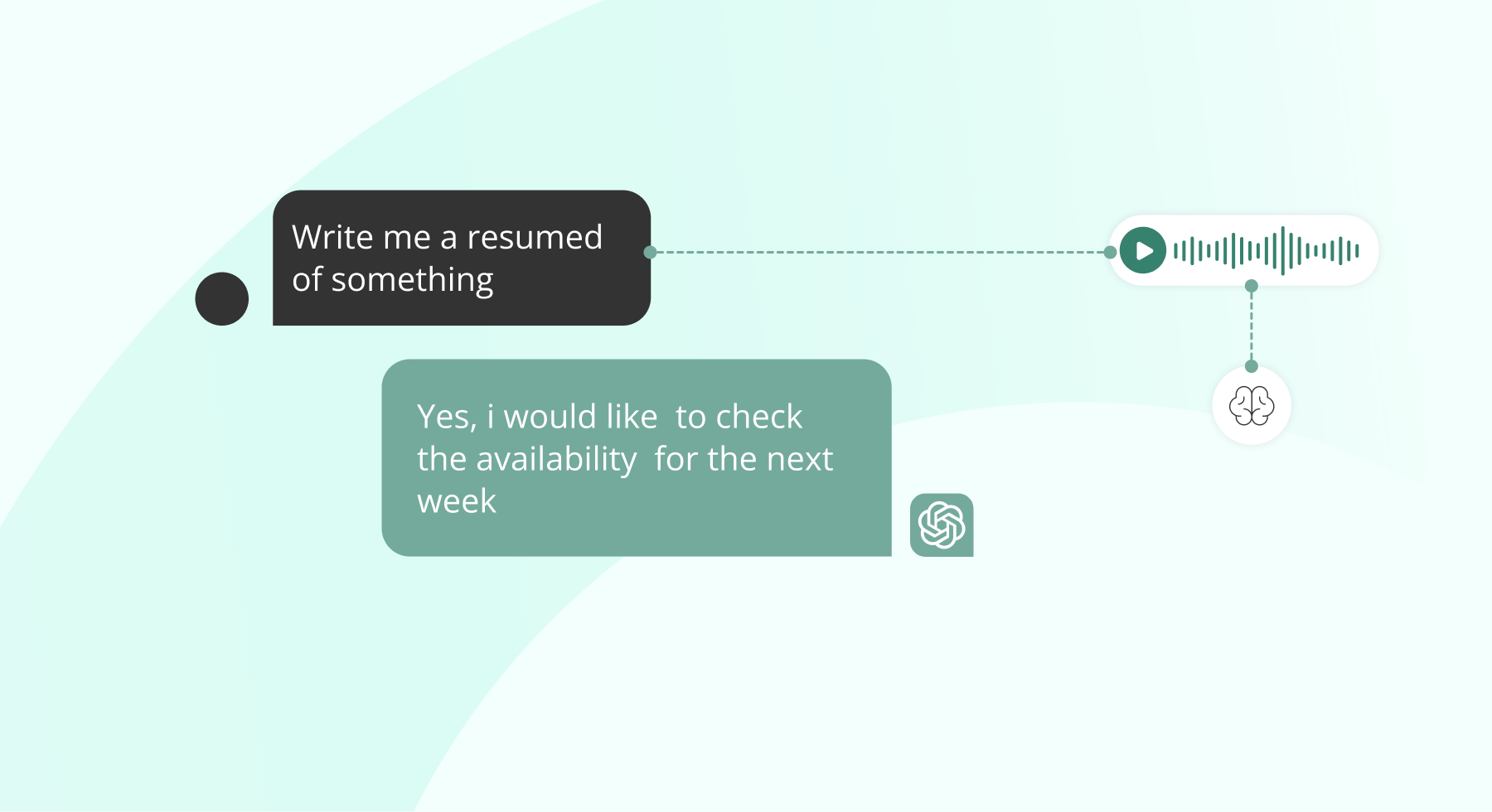
With the recent Beta launch of the voice assistant, HiJiffy continues to revolutionise the way hotels communicate with guests. This latest development within Guest Communications Hub utilises OpenAI’s state-of-the-art technology, including Whisper API and advanced language processing capabilities. The virtual assistant can detect and understand the language of voice clips, providing instant and accurate responses to guests’ inquiries.This voice assistance solution is already available on WhatsApp and Facebook Messenger and will soon expand to other channels, such as the hotel website chat widget and other key social media and messaging apps. Guests will be able to easily access the virtual assistant from any device and receive quick and efficient assistance with their needs.The multi-language capability of the voice assistantOne of the advantages of using Whisper API developed by OpenAI, creators of ChatGPT, enhanced with advanced language processing capabilities, is the ability to understand multiple languages. As a result, HiJiffy’s virtual assistant can communicate with guests in their preferred language, providing a more personalised and human-like experience.Additionally, the Whisper API’s advanced language detection capabilities will help the virtual assistant understand and respond to complex voice communications, making it more effective in handling guest requests and inquiries.How Whisper API’s architecture powers HiJiffy’s voice assistantAt a high level, two components within the Whisper API architecture support the voice assistance capacity of HiJiffy’s Guest Communications Hub.Speech-to-Text: converting the audio input into text. Using a combination of signal processing and machine learning techniques enables the Whisper API to transcribe spoken words.Language Detection: identifying the audio input’s language, enabling the virtual assistant to understand it and respond in the same or the user’s preferred language.HiJiffy’s proprietary Aplysia OS powers the voice assistant with Natural Language Understanding (NLU) – understanding the meaning and intent behind the words. Deep learning models, such as recurrent neural networks (RNNs) and transformer networks, analyse the text and extract relevant information.According to a paper titled Robust Speech Recognition via Large-Scale Weak Supervision, written by some of the creators of Whisper AI, it provides transcriptions with significantly fewer errors than previous models. The authors even say that compared to a model developed by Facebook AI in 2020, Whisper AI, on average, makes 55.2% fewer errors than Facebook’s model when tested on 14 different speech datasets. The authors also compared Whisper AI against professional transcriptionists and stated, “Whisper’s English ASR performance is not perfect but very close to human-level accuracy.”Overall, integrating OpenAI’s Whisper API and advanced language processing capabilities into HiJiffy’s virtual assistant is a significant step forward in developing voice-based communication technologies in the hospitality industry. Hotels can be empowered to improve guest satisfaction further and streamline operations. This is likely to result in a more efficient and positive experience for guests but also hotel staff, thanks to reduced repetitive tasks. OpenAI – the team behind ChatGPTOpenAI is an AI research laboratory that aims to ensure that artificial general intelligence (AGI) benefits all of humanity. It consists of the for-profit OpenAI LP and its parent company, the non-profit OpenAI Inc. Founded in December 2015 by Elon Musk, Sam Altman, Greg Brockman, Ilya Sutskever, Wojciech Zaremba, and several others.The company also develops and releases AI models and tools that developers and researchers can use to advance the field. Additionally, OpenAI is also working on developing a range of AI-based products and services that can be used by businesses and individuals, such as the GPT-3 language model and the Whisper API for voice-based communication.
Lire l'Article
Partager

Pagination des publications

Previous 1 … 4 5 6 7 Next
Top News
  • AtlasProtect lance une plateforme SaaS à Paris pour l'intelligence géopolitique dans le secteur touristique, dès 199 € par mois.

    Lire l'Article
  • Une infographie qui révèle la vraie hiérarchie digitale des groupes hôteliers

    Lire l'Article
  • Food Hotel Tech 2026 à Paris : 8 700 visiteurs, 230 exposants et Septeo primé pour Witbooking AI.

    Lire l'Article
  • Wifirst et Hikvision S'allient pour Optimiser la Vidéosurveillance via l'IA et Garantir la Cybersécurité en Europe

    Lire l'Article
  • Doyield repositionne le débat OTA à l’ère de l’IA dans un podcast de 10 minutes hotels qui bouscule les idées reçues du secteur hôtelier

    Lire l'Article
Articles sponsorisés
  • Visible sur Booking et Google aujourd’hui. Invisible sur les IA demain ?
  • Le PMS va disparaître. Place à l’usage réel.
  • Comment adapter la visibilité de son hôtel quand l’IA change le parcours du voyageur
  • Si votre PMS ne coche pas ces 4 cases, votre hôtel perd de l’argent chaque semaine
  • Quicktext devient Quinta. Demain, vos réservations passeront par des agents IA. Etes-vous prêt ?
  • HCR Bien-Être s’engage dans la prévention des addictions au sein du secteur Hôtels, Cafés et Restaurants
Derniers articles
  • Le Rosemary Hôtel, premier 5 étoiles de Bastia, ouvrira en mai dans une demeure de 1925.
    • 18 avril 2026
  • Minor Hotels annonce la fermeture définitive de l'Anantara World Islands Dubai Resort le 10 avril 2026.
    • 18 avril 2026
  • MCR Property Group investit 150 millions de livres pour rénover et repositionner quatre hôtels à Londres sous une nouvelle marque.
    • 18 avril 2026
  • Zedwell transforme le 1 Princes Street à Londres en hôtel moderne, alliant patrimoine architectural et technologie avancée.
    • 18 avril 2026
  • Sunborn Vancouver : Hôtel Flottant Alimenté par Énergies Renouvelables et Réduction Énergétique de 60 à 70%
    • 18 avril 2026
Informations de contact
contact@10minutes.news
Espace publicitaire
Contactez-nous pour recevoir notre media kit à l’adresse suivante : tony@10minhotel.com
Communiqué de Presse
Cliquez ici pour publier votre communiqué de presse
Le 10 Minutes Hôtelier Le 10 Minutes Hôtelier
  • Top news
  • Articles
  • Communiqué de presse
  • Podcast
  • Vidéo
  • 👉 Newsletter
  • 🌎 Langues
L'actualité hôtelière résumée et simplifiée pour vous faire gagner du temps

Input your search keywords and press Enter.

Gérer le consentement
Pour offrir les meilleures expériences, nous utilisons des technologies telles que les cookies pour stocker et/ou accéder aux informations des appareils. Le fait de consentir à ces technologies nous permettra de traiter des données telles que le comportement de navigation ou les ID uniques sur ce site. Le fait de ne pas consentir ou de retirer son consentement peut avoir un effet négatif sur certaines caractéristiques et fonctions.
Fonctionnel Toujours activé
L’accès ou le stockage technique est strictement nécessaire dans la finalité d’intérêt légitime de permettre l’utilisation d’un service spécifique explicitement demandé par l’abonné ou l’utilisateur, ou dans le seul but d’effectuer la transmission d’une communication sur un réseau de communications électroniques.
Préférences
L’accès ou le stockage technique est nécessaire dans la finalité d’intérêt légitime de stocker des préférences qui ne sont pas demandées par l’abonné ou l’internaute.
Statistiques
Le stockage ou l’accès technique qui est utilisé exclusivement à des fins statistiques. Le stockage ou l’accès technique qui est utilisé exclusivement dans des finalités statistiques anonymes. En l’absence d’une assignation à comparaître, d’une conformité volontaire de la part de votre fournisseur d’accès à internet ou d’enregistrements supplémentaires provenant d’une tierce partie, les informations stockées ou extraites à cette seule fin ne peuvent généralement pas être utilisées pour vous identifier.
Marketing
L’accès ou le stockage technique est nécessaire pour créer des profils d’internautes afin d’envoyer des publicités, ou pour suivre l’utilisateur sur un site web ou sur plusieurs sites web ayant des finalités marketing similaires.
  • Gérer les options
  • Gérer les services
  • Gérer {vendor_count} fournisseurs
  • En savoir plus sur ces finalités
Voir les préférences
  • {title}
  • {title}
  • {title}